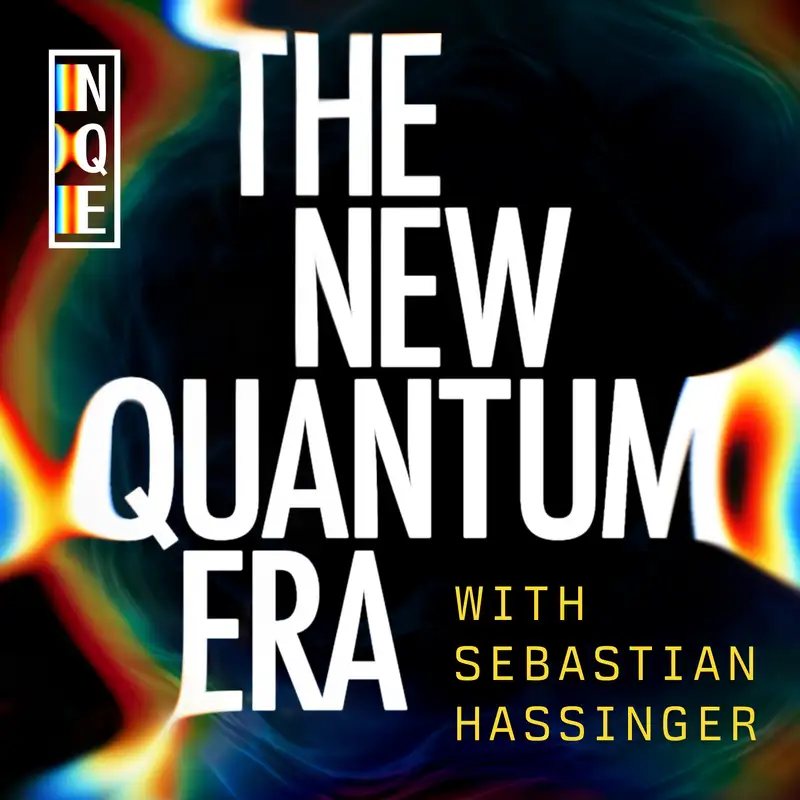
Episode 100: Live at Barnes & Thornburg — Reflections on the First 100 Episodes
Summary
For the 100th episode of The New Quantum Era, the microphone turns around. Bob Karr — partner at Barnes & Thornburg, co-chair of the firm's Quantum Technology Industry Group, and lead architect of the *Quantum Law Navigator* — invited Sebastian to Chicago for a live audience recording at the firm. In front of scientists, investors, policymakers, and students, Bob leads a wide-ranging conversation about what 99 episodes and a new book have taught Sebastian about where quantum technology actually stands, what building a foundation of understanding in an emerging field really requires, and what comes next — including the Helgoland documentary, the evolution of quantum ecosystems, and the launch of Build Quantum Partners. ---This is the 100th episode of The New Quantum Era, and it arrives at a moment of convergence: the book is out, the Helgoland centennial documentary is in production, regional quantum ecosystems are scaling from ambition to construction, and the field is entering the transition from heroic-era qubit demos to the hard systems engineering that will determine whether quantum computing becomes a real industry. Bob Karr — who sits at the intersection of law, policy, and the quantum ecosystem as the person behind the Quantum Law Navigator and a convener across the Chicago quantum community — is the right person to conduct this retrospective, and Barnes & Thornburg, at the center of arguably the most sophisticated quantum ecosystem in the world, is the right place to do it.
The conversation is structured as a celebration and an examination: what has Sebastian actually learned by sitting with nearly 100 physicists, engineers, founders, and policymakers? How has the field changed since that first visit to TJ Watson in 2017? What do regional hubs like the Illinois Quantum and Microelectronics Park and Quebec's DistriQ tell us about what it takes to move from science to industry? And what does the next era demand — not just from researchers and companies, but from everyone?
---
What You'll Learn
- Why the Helgoland documentary matters: in June 2025, Sebastian and his wife traveled to the island where Heisenberg's 1925 insight gave birth to quantum mechanics, producing a documentary at a Yale–Max Planck centennial conference attended by multiple Nobel laureates — and what that experience distilled about the state of the field
- How Sebastian's journey into quantum began: arriving at IBM's TJ Watson Research Center in 2017 to help with Qiskit's open source strategy, encountering the 53-qubit milestone, and recognizing the earliest stages of an emerging technology that would become his life's work
- What the "Heroic Age of Qubits" was — and why it ended: the period of genius PIs racing to prove quantum advantage, culminating in Google's 2019 random circuit sampling claim, and why that finish line turned out to be a starting line
- What Harley Johnson and the IQMP reveal about ecosystem-building: why the Illinois Quantum and Microelectronics Park is the world's leading example of building a quantum ecosystem, and what it takes to bridge deep science and economic development
- What Quebec's DistriQ teaches about sustainability: the 90% public / 10% private funding model designed to flip over ten years, and why that benchmark matters for every regional hub
- Why Alejandra Castillo's economic development lens changed the picture: how quantum's impact extends far beyond qubits into advanced manufacturing, supply chain, and the communities that get to participate in the upside
- What Nadya Mason's leadership model means for the field: the dean of UChicago's Pritzker School who wasn't a "math person" and sees leadership as service — and why the field needs every kind of creative mind, not just PhDs in physics
- What John Martinis's arc from the 1986 Josephson junction paper through the Nobel Prize to CoLab reveals: the transition from heroic-era physicist to systems thinker pursuing open architecture and consortium-based quantum computing
- Why the Monte Carlo algorithm is the key analogy for quantum's future: the technique that took 30 years to find its commercial application as a reminder that the most important uses of quantum computers haven't been imagined yet
- Where fault tolerance actually stands: why it's an emergent property of the whole system — not a single breakthrough — and why the classical-quantum feedback loop for mid-circuit measurement and syndrome correction is the thing to watch
- Why multiple qubit modalities will coexist: the case for neutral atoms in the near term, superconducting and spin qubits in the long term, and photonics as a dark horse — and why this isn't a winner-take-all race
- What Build Quantum Partners is building: a new venture to reduce friction for quantum companies entering the U.S. market, partner with regional ecosystems, and ultimately develop the quantum equivalent of biotech hub infrastructure
---
Resources & Links
Guest & Host Links
- Robert W. Karr Jr. — Barnes & Thornburg Attorney Profile — Bob's firm bio covering his role as partner and QTI Group co-chair
- Robert W. Karr Jr. — LinkedIn — Recent activities including the Illinois–UK Quantum Partnerships Mission and Keidanren Next-Gen Salon
- Quantum Law Navigator — Chicago Quantum Exchange (PDF) — The ten-chapter resource Bob led, mapping the U.S. legal and regulatory landscape for quantum
- Barnes & Thornburg Quantum Technology Industry Group — The firm's quantum practice, host of the live recording
The Book & Documentary
- The New Quantum Era by Sebastian Hassinger — Released May 2026; the companion book tracing the people, science, and engineering behind quantum technology's emergence
- Helgoland Documentary — In production; shot over five days at the Yale–Max Planck centennial conference on the island where Heisenberg formulated matrix mechanics in 1925
Episodes & Guests Referenced
- Episode 82 — The Illinois Quantum Ecosystem with Harley Johnson — The IQMP's CEO on building the world's largest dedicated quantum technology park
- Episode 79 — Building a Quantum Ecosystem from Scratch with Martin Laforest — How Quebec built a $400M quantum ecosystem with a deliberate public-to-private capital transition
- Episode 75 — Regional Quantum Development with Alejandra Y. Castillo — Quantum through the economic development lens: jobs, supply chains, housing, and community participation
- Episode 77 — Quantum Leadership with Nadya Mason — The dean of UChicago's Pritzker School on the human and institutional side of building the quantum era
- Episodes 48, 67, 71 — John Martinis — From Josephson junctions to the Google quantum supremacy experiment to the open-architecture approach at CoLab
- Episode 96 — Funding the Quantum Middle with Kris Naudts and Zeynep Koruturk of Firgun Ventures — Why the Series A/B financing gap is the new bottleneck, and how specialist investors are stepping in
Key Institutions & Ecosystem
- Illinois Quantum and Microelectronics Park — Wikipedia — Overview of the $9B IQMP, its tenants, and construction timeline
- Chicago Quantum Exchange — The research and industry hub at the center of the Chicago quantum ecosystem
- DistriQ — Quebec's Quantum Innovation Zone — The Sherbrooke-based quantum hub discussed as a model for public-to-private ecosystem transition
---
Key Quotes & Insights
- On why he stayed: "I was done ... in my search for the next thing. This is going to be the emerging technology that I focus on for the rest of my life."
- On the Heroic Age of Qubits: "It was sort of like the genius PIs declaring that they alone know how to build a qubit. Nobody else can do it as well as them, and they're going to get to that finish line... In fact, it was a rush to the starting line for making things real."
- On what we don't know: "Unless you can explain something, you don't really understand it. So my method with the podcast and with the book — a lot of it is so that I can learn."
- On the Monte Carlo lesson: "Nobody would have created the Monte Carlo algorithm before that computer existed... "
- On the IQMP: "It's the world leading example of building an ecosystem for quantum technologies."
- On urgency and patience: "We have to have the urgency to try to build these devices, but then the patience to discover what it is that they're actually really good at."
- On beginner's mind: "If we wait around for the things that are obvious — optimization, drug discovery — the innovations that happen along the way are going to be adopted by your competitors and you're not going to be competitive."
---
Stay in the Ecosystem
- Subscribe on Apple Podcasts, Spotify, YouTube, or Amazon Music.
- Get the newsletter and full archive at newquantumera.com — show notes, links, and deeper context for every episode.
- Follow NQE on LinkedIn and Bluesky for between-episode updates.
- Get the book — The New Quantum Era is available now wherever books are sold.
Sponsor
This episode is brought to you by Outshift, Cisco's incubation engine. The need for computational power is rapidly increasing in every sector. From drug discovery to material innovation to complex financial modeling, classical systems are reaching their absolute limits. It's time for a paradigm shift. The answer is a scalable quantum network, built on open standards and vendor-agnostic architecture. By uniting distributed quantum devices, you unlock limitless computational power.
Learn more about the Cisco Universal Quantum Switch at Outshift.com.
Go deeper with the blog post The switch that quantum networking has been waiting for.
Creators and Guests
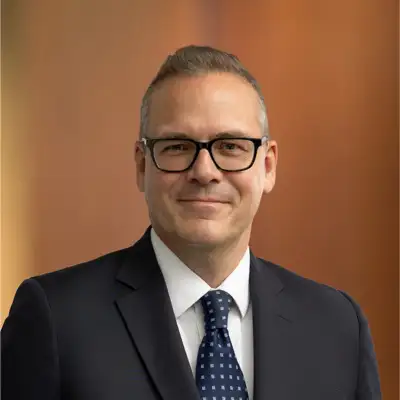
Host
Robert Karr, Jr
Robert Karr is a partner in the Corporate and Government Services Departments and co-chair of the firm’s Quantum Technology Industry (QTI) Group.