The Open Source Substrate for Quantum with Ben Castanon
Summary
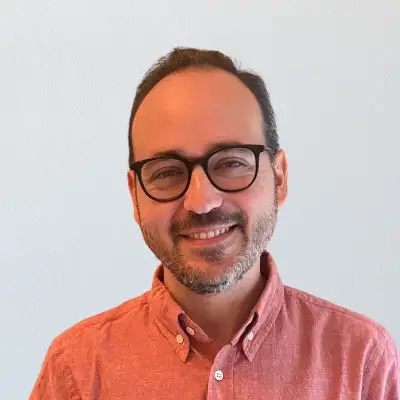
What does it take to build durable open-source infrastructure for a field that hasn't yet delivered on its biggest promises? Ben Castanon, the first-ever CEO of Unitary Foundation, joins Sebastian to talk about the structural funding gap facing quantum open-source software, why nearly 40% of full-time contributors go uncompensated, and what a "Linux for quantum" would actually require. It's a candid conversation about community, memberships from companies like NVIDIA and IBM, and the case for treating open tooling as public infrastructure rather than a nice-to-have.Ben Castanon became Unitary Foundation's first CEO in February 2026, after roughly four years with the organization as Chief of Staff and then COO. He came into quantum from an unusual direction — leadership roles at Pioneer Works, the Brooklyn arts-and-science center — and that background shows in how he thinks about scaffolding communities, funding public goods, and borrowing what works from other fields.
This conversation matters now because Unitary Foundation sits at an inflection point. It has scaled from a microgrant program (the "Unitary Fund") into a foundation with a global developer community, corporate members including NVIDIA and IBM, an active compiler collection, a benchmarking initiative, and an annual open-source survey that increasingly serves as the field's ground truth. If you care about how quantum computing actually gets built — not just who wins the hardware race — this episode lays out the infrastructure argument clearly.
What You'll Learn
- Why Ben argues quantum open source falls into a structural funding gap between academia (chasing novel papers) and venture capital (chasing profitable businesses), and what philanthropy has to do about it
- What "public goods" and "digital commons" actually look like in quantum — from benchmarking to compilation to error mitigation tooling
- How to interpret the 2025 QOSS Survey finding that ~40% of full-time quantum OSS contributors are unpaid, and why Ben sees it as both an opportunity and a warning
- How Unitary Foundation is experimenting with continuous compensation for contributors via bounty programs and pilots with Merit Systems
- Why corporate members like NVIDIA and IBM invest in a vendor-neutral nonprofit — and how governance keeps the "open" in open source
- What a healthy pipeline from first-time contributor to sustained open-source maintainer would look like, and why Ben wants an endowment behind it
- Why Ben resists top-down definitions of the "open substrate" and prefers to let the community surface bottlenecks
- The long-term vision: a "Linux moment" for quantum, and what it would take to install it before proprietary stacks lock in
Resources & Links
Guest & Organization
- Announcing Our New CEO — Unitary Foundation — The February 2026 announcement of Ben as UF's first CEO, with the full arc from Chief of Staff to COO to CEO.
- Ben Castanon on LinkedIn — Ben's professional history, including his Pioneer Works tenure and current UF work.
- Unitary Foundation — The organization's homepage and hub for grants, tools, membership, and community.
Papers & Reports
- 2025 Quantum Open Source Software Survey Results — The fourth annual QOSS survey, including the finding that ~40% of full-time contributors are unpaid.
- The Young and the Relentless — The Quantum Insider — Independent coverage of the QOSS survey's demographic findings.
- Celebrating Over 100 Microgrants — Impact report: 420+ citing papers, 3 startups, 1 nonprofit, and 400+ OSS contributors funded.
Tools & Programs
- Unitary Compiler Collection (UCC) — The frontend-agnostic quantum compiler collection Ben references as a candidate for the open substrate.
- UCC on GitHub — The active repo, supporting Qiskit, Cirq, PyTKET, and OpenQASM 2/3.
- unitaryHACK 2026 — The sixth annual bug-bounty hackathon, one of UF's core mechanisms for compensating open-source contributors.
Ecosystem
- NVIDIA Joins Unitary Foundation as Core Member — The May 2026 announcement referenced in the conversation.
- Announcing Unitary Foundation (Rebrand) — Context on why "Unitary Fund" became "Unitary Foundation."
Key Quotes & Insights
- On the structural gap: There are "third spaces" where projects don't fit the incentives of either a startup or an academic lab — but where the whole ecosystem benefits. Benchmarking is the clearest example.
- On unpaid contributors: "We've developed the field to a place where we're starting to hit up against the classic open source community issues." The volunteer surge is real — but so is the risk of losing those contributors to better-paying fields if UF can't convert enthusiasm into compensation.
- On why big companies join: A functional field needs people to hire. Ben's argument to corporate members is partly workforce development — thousands of developers getting on-the-job training on neutral, community-owned tools.
- On the substrate: Ben resists top-down definitions of what belongs in the open substrate. "It's much better to have all of the practitioners giving voice to what open tools they need."
- On his long-term ambition: Build a philanthropic endowment that funds the microgrant pipeline in perpetuity — because "I don't see that as ever becoming a resource that is not of use."
Related Episodes
- Quantum Open Source with Will Zeng and Ziyaad Bhorat — The direct companion to this episode, unpacking the white paper co-authored with Ben on why quantum OSS is structurally underfunded.
- Quantum Error Mitigation using Mitiq with Misty Wahl — A deeper look at Mitiq, one of UF's flagship open-source tools.
- Quantum Education and Community Building with Olivia Lanes — A parallel view on developer community and workforce development in quantum.
- Careers in Quantum with Anastasia Marchenkova — Relevant context on where quantum developers actually end up.
Stay in the Ecosystem
- Subscribe to The New Quantum Era on Apple Podcasts, Spotify, YouTube, or Amazon Music.
- Sign up for the newsletter at newquantumera.com for episode notes, essays, and follow-ups.
- Follow along on LinkedIn and Bluesky.
- If you're building open-source quantum tools — or want to support the people who are — start at unitary.foundation.
Sponsor
This episode is brought to you by Outshift, Cisco's incubation engine. The need for computational power is rapidly increasing in every sector. From drug discovery to material innovation to complex financial modeling, classical systems are reaching their absolute limits. It's time for a paradigm shift. The answer is a scalable quantum network, built on open standards and vendor-agnostic architecture. By uniting distributed quantum devices, you unlock limitless computational power.
Learn more about the Cisco Universal Quantum Switch at Outshift.com.
Go deeper with the blog post The switch that quantum networking has been waiting for.