Quantum Workforce, Sensing, and the Long Game of Operationalization with Isabella Martinez
Summary
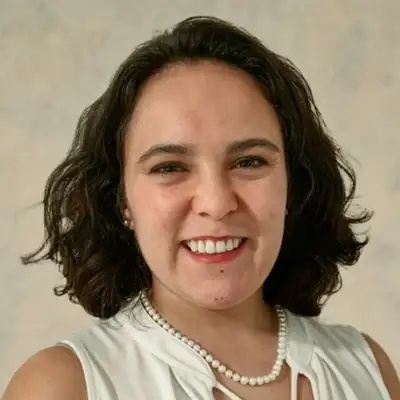
What does it actually take to get quantum technology into the hands of the people who will use it? Isabella Bello Martinez, Senior Lead Quantum Technologist at Booz Allen Hamilton, brings a rare perspective to that question — one shaped by biomedical engineering, economic analysis of AI's industrial impact, and years of building interdisciplinary quantum teams for federal and defense clients. This episode explores quantum workforce strategy, the operationalization gap between physics and deployment, and why the most important skill in quantum right now might not be a physics degree.Isabella Martinez sits at an unusual intersection in the quantum ecosystem: she's not primarily a hardware researcher or an algorithm theorist, but a practitioner who has to make quantum work in operational environments — for customers who have real missions, real constraints, and very little patience for technology that can't be deployed. Her team at Booz Allen spans quantum computing, quantum sensing, and post-quantum cryptography, which means she's watching all three of the field's major near-term vectors simultaneously.
This conversation was recorded at Quantum World Congress 2026, and it reflects the mood of that moment: sensing is on the cusp of real deployment, PQC migration is being driven by policy urgency, and quantum computing is still asking the question of when — but the "when" is getting more specific. If you work in quantum and care about how the technology actually crosses the gap from lab to mission, this episode is for you. It's also a genuinely useful listen for anyone thinking about quantum careers, workforce development, or how to build teams that can navigate a technology that doesn't yet have a playbook.
What We Get Into
- Why Isabella's biomedical engineering capstone — not a physics class — shaped her entire approach to quantum: The lesson wasn't about building a better device; it was about why a life-saving tool sat unused because no one had time to get trained on it.
- The four-stage commercialization arc she uses to frame quantum maturity: Solve for physics, then engineering, then business case, then operationalization — and why that last step is the one the field talks about least.
- What quantum sensing deployment actually looks like right now: Including a vivid example of a quantum PNT sensor that "can't get wet" and what happens when you try to put it in a waterproof box without destroying its precision advantage.
- Why quantum sensing and quantum computing will diverge in their adoption paths: A drone operator doesn't need to know their navigation data is quantum-derived. A quantum computing user, at least for now, probably does — and that changes everything about how you design for adoption.
- How Booz Allen's team discovered the wrong part of a drug discovery workflow was being targeted for quantum speedup: A computational biologist and chemist sat down with the physics team and revealed that the step everyone assumed was the bottleneck wasn't the bottleneck at all.
- Why Isabella actively recruits people with criminology degrees, economics backgrounds, and education startup experience onto a quantum team: And why she's more worried about the rise of pure quantum-only graduate programs than she is about the talent shortage.
- The AI parallel that's shaping how enterprise customers think about quantum timing: Customers who watched AI capabilities leap unexpectedly are now asking "when" instead of "what" — but they're also more willing to wait for the right moment rather than jump in early.
- Her honest read on NISQ-era value: Real scientific output is happening on today's devices, but the early 2030s are where she expects the first commercially meaningful fault-tolerant results to appear.
- What the quantum community risks losing as the field matures: The collaborative, cross-disciplinary spirit that has defined the early era — and why she thinks that spirit is actually a competitive asset worth protecting.
Resources & Links
Guest & Organization
- Isabella Bello Martinez — InformationWeek Author Page — Bio and links to her published articles on quantum talent and PQC for enterprise audiences.
- Booz Allen Quantum Sciences & Technologies Capability Sheet — Overview of Booz Allen's quantum practice, where Isabella leads products and partnerships.
Articles by Isabella Martinez
- "5 Steps for Implementing the New Post-Quantum Cryptography Standards" — InformationWeek — Her practical framework for organizational PQC migration, including the cryptographic inventory problem discussed in this episode.
- "Leading in the Race for Quantum Talent" — InformationWeek — Her argument for building quantum literacy at every organizational level, not just hiring PhDs — a theme central to this conversation.
- "Can Quantum Supercharge AI?" — Velocity by Booz Allen — Co-authored piece on quantum machine learning applications in defense, health, and intelligence missions.
Context & Policy
- "Post-Quantum Cryptography, Explained" — Booz Allen Hamilton — Booz Allen explainer co-authored by Isabella's team; useful background on the PQC migration landscape she references.
- NIST NCCoE — PQC Migration FAQ — Authoritative federal policy context, including algorithm finalization and binding federal deadlines.
- "Booz Allen Wins Air Force Quantum Research Contract" — ExecutiveBiz — The $25.3M AFRL contract for quantum R&D through 2031 that frames Booz Allen's current federal quantum posture.
- "Booz Allen Backs the Search for Quantum's Next Breakout Company" — The Quantum Insider — Booz Allen as presenting sponsor of the QWC 2026 Startup Pitch Competition, the event where this conversation was recorded.
Key Quotes & Insights
> "The problem wasn't actually an engineering problem. An engineering tool existed for the problem they were having us solve. The problem was that getting certified to use that tool took so long that most nurses didn't have the time to get trained on it."
— Isabella on the capstone project that shaped her entire career philosophy: adoption is often a harder problem than invention.
> "First you have to solve for physics, then you have to solve for engineering, and then you have to solve for business case. But I would argue then you have to solve for operationalizing something — which is even beyond them."
— On the four-stage arc that the quantum field's commercialization narrative tends to stop one step too early.
Insight: When Booz Allen sat a computational biologist and chemist down with their quantum algorithm team to walk through an actual drug discovery workflow, the team discovered that the step they'd assumed was the computational bottleneck wasn't the bottleneck at all. The right use case only became visible when the domain experts were in the room.
> "I need to do this purposefully. I have to purposefully open reqs where we are looking for people with more than just a physics degree."
— On why interdisciplinary hiring is a deliberate strategy, not a nice-to-have.
Insight: Isabella draws a direct parallel between the rise of pure quantum graduate programs and the earlier wave of computer-science-only hiring — and worries that producing graduates who have "only done quantum" may replicate the same creativity deficit the field is trying to escape.
Related Episodes
- Ep. 34 — Careers in Quantum with Anastasia Marchenkova — A complementary look at quantum career paths and what it takes to build a life in the field, from a different practitioner vantage point.
- Ep. 60 — Quantum Careers for Gen Z with Deeya Viradia — Explores the next generation of quantum workforce entrants and what they're looking for — pairs well with Isabella's hiring philosophy.
- Ep. 105 — Quantum in the Big Four with Aaron Kemp — Another practitioner perspective on how large consulting and advisory firms are translating quantum into enterprise and government contexts.
- Ep. 107 — Quantum Risk, Readiness, and the Enterprise Boardroom with Richard Entrup — Focuses on the organizational and risk dimensions of quantum adoption, including PQC — a natural companion to Isabella's operational framing.
- Ep. 108 — Quantum Workforce Intelligence from qubitsok.com with Piotr Lewandowski — Data-driven look at the quantum job market; complements Isabella's on-the-ground hiring perspective with quantitative workforce signals.
Stay in the Ecosystem
If this episode got you thinking about how quantum actually gets deployed — not just how it works — there's more where that came from.
- 🎙️ Subscribe on Apple Podcasts | Spotify | YouTube | Amazon Music
- 📬 Sign up for the newsletter at newquantumera.com — curated updates on the episodes, ideas, and developments worth paying attention to.
- 💼 Follow us on LinkedIn for episode announcements and community discussion.
- 🦋 Find us on Bluesky for the ongoing conversation.
---