Quantum Chemistry's Classical Limits with Garnet Chan
Summary
One of the most-cited arguments for near-term quantum advantage in chemistry just got a rigorous classical answer — from one of the world's leading quantum chemists. Garnet Chan's group at Caltech solved the FeMo-cofactor ground-state energy problem classically, to chemical accuracy, using tensor networks and coupled cluster methods. If you've heard that quantum computers are uniquely needed to simulate nitrogen fixation, this episode will sharpen — and complicate — that picture.Your host, Sebastian Hassinger, is joined on this episode by Garnet Chan, the Bren Professor of Chemistry at Caltech, a member of the National Academy of Sciences, and among the most cited computational chemists in the world (34,000+ Google Scholar citations). Garnet is neither a quantum computing booster nor a dismissive skeptic. He's a theorist who works at the exact boundary between what classical algorithms can and cannot do — and who keeps finding that boundary further out than the quantum computing community has claimed. The FeMo-cofactor has been a flagship quantum computing use case for nearly a decade: a catalytic core of the enzyme that fixes atmospheric nitrogen into ammonia, and a molecule widely described as "beyond classical reach." Chan's January 2026 paper challenges that framing directly. This conversation explains what was actually solved, what wasn't, and what it would genuinely take for quantum computers to contribute to the chemistry of nitrogen fixation. This episode is for researchers, engineers, and informed observers who want an honest, technically grounded view of where quantum computers genuinely help in chemistry — and where classical methods are more capable than the field has admitted.
What You'll Learn
- Why the FeMo-cofactor became one of the quantum computing community's favorite benchmark — and why the framing around energy savings from nitrogen fixation is less accurate than it sounds
- What "chemical accuracy" (~1 kcal/mol) actually means as a precision target, and why hitting it classically undermines a decade of quantum resource estimates
- Why real chemical systems are only "slightly entangled" — and what that means for the general argument that quantum computers are the natural tool for quantum chemistry
- The difference between a problem being hard and a problem being exponentially hard — and why that distinction matters enormously for quantum advantage claims
- Where the genuine classical wall might be: bridging 15 orders of magnitude in timescale to simulate an enzyme's full catalytic mechanism — and whether quantum computers have anything to say about that
- Why Chan wrote a public blog post explaining his own paper — and what that reveals about the state of discourse in quantum chemistry and the quantum computing industry
- The broader impact of quantum information science on chemistry — beyond hardware, the conceptual tools of quantum information have genuinely reshaped how chemists think about many-body states
- What Chan is actually working toward: a full computational understanding of the nitrogenase reaction mechanism, using machine learning to bridge timescales classically — a decade-long journey he finds genuinely exciting
Resources & Links
The Central Paper & Commentary
- Zhai et al. (2026) — "Classical Solution of the FeMo-Cofactor Model to Chemical Accuracy and Its Implications" arXiv:2601.04621 — The January 2026 preprint at the heart of this episode; the classical solution of the standard 76-orbital/152-qubit FeMo-co benchmark.
- Chan — Quantum Frontiers Blog Post (March 2026) The FeMo-Cofactor and Classical and Quantum Computing — Chan's own accessible commentary on the paper, written in response to widespread misinterpretation; essential reading alongside the paper.
Key Papers for Context
- Chan (2024) — "Spiers Memorial Lecture: Quantum Chemistry, Classical Heuristics, and Quantum Advantage" Faraday Discussions, 254, 11–52 — The formal theoretical framework behind Chan's thinking, including the "classical heuristic cost conjecture"; the deep-dive companion to this episode.
- Lee et al. (2023) — "Evaluating the Evidence for Exponential Quantum Advantage in Ground-State Quantum Chemistry" Nature Communications — Chan group's landmark 2023 paper concluding that evidence for exponential quantum advantage across chemical space has yet to be found.
- Begušić & Chan (2023/2024) — "Fast Classical Simulation of Evidence for the Utility of Quantum Computing Before Fault Tolerance" Science Advances — The paper showing classical simulation on a single laptop core could reproduce and exceed IBM's 127-qubit "utility" experiment.
- Bauer, Bravyi, Motta & Chan (2020) — "Quantum Algorithms for Quantum Chemistry and Quantum Materials Science" arXiv:2001.03685 — A balanced review by Chan and colleagues showing he takes quantum algorithms seriously; useful counterpoint to the skeptical framing.
- Babbush et al. (2025) — "The Grand Challenge of Quantum Applications" arXiv:2511.09124 — Google Quantum AI's direct engagement with Chan's skeptical position; argues polynomial speedups may still be practically decisive.
- Computational Chemistry Highlights — Review of FeMo-co Paper compchemhighlights.org — Third-party commentary from Jan Jensen (University of Copenhagen).
Tools & Software
- PySCF — Python-based Simulations of Chemistry Framework https://pyscf.org — The open-source quantum chemistry package co-stewarded by Chan's group; widely used for electronic structure calculations.
- BLOCK — DMRG and Matrix Product State Algorithms https://github.com/sanshar/Block — Chan group's open-source implementation of density matrix renormalization group methods; the tensor network engine underlying much of this work.
Guest Links
- Chan Lab at Caltech chan-lab.caltech.edu — Research group homepage with publications, software, and group members.
- Garnet Chan — Caltech Faculty Profile cce.caltech.edu/people/garnet-k-chan — Official Caltech Division of Chemistry & Chemical Engineering page.
- Google Scholar Profile scholar.google.com — 34,000+ citations across theoretical chemistry and condensed matter physics.
- Caltech Science Exchange — Ask a Caltech Expert: Quantum Chemistry scienceexchange.caltech.edu — Accessible overview of Chan's perspective for a general science audience.
Key Quotes
"To a good approximation, you and I are not entangled. That's essentially how people think about molecules — atoms are distinct entities, and you can define each as a local entity because its properties are not intrinsically tied up with some other thing." — Garnet Chan, explaining why most chemical systems are classically tractable
"The whole field of chemistry developed without even needing to think about quantum mechanics — and certainly without having to think about a quantum computer." — Chan pushing back on Feynman's often-cited "simulate nature with quantum" framing
"It looks like it should be an impossible task — computing the ground state classically of a Hamiltonian defined in a space of 150 qubits. But all chemical and physical systems are highly structured. The ground state is only a slightly entangled state." — Chan on why the FeMo-co classical solution is possible despite sounding intractableI
Related Episodes
- Ep 42: Generative Quantum Eigensolver with Alán Aspuru-Guzik — Aspuru-Guzik is one of the pioneers of quantum chemistry on quantum computers and represents the optimistic counterpart to Chan's measured skepticism. A natural pair for hearing both sides of this debate.
- Ep 30: Aspiring Quantum Chemist with Professor Lin Lin — Another leading computational mathematician working at the quantum chemistry/quantum computing interface; directly relevant to the classical simulation landscape Chan describes.
- Ep 31: The Utility of Quantum Computing for Chemistry with Jamie Garcia — IBM's perspective on quantum utility in chemistry, including the 127-qubit experiments that Chan's group classically replicated; great context for understanding the other side of the IBM debate.
- Ep 86: Quantum Advantage Achieved with Dominik Hangleiter — A theorist's careful examination of what "quantum advantage" really means and whether it's been achieved — thematically central to Chan's work.
- Ep 35: Quantum Benchmarking with Jens Eisert — Eisert is one of the key figures in rigorous quantum benchmarking; his work on the limits of near-term devices complements Chan's argument about the absence of evidence for exponential advantage.
Sponsor
qubitsok — Cut Noise. Work Quantum. The quantum computing job board and arXiv research digest built for the community.
- Job seekers & researchers: Subscribe free at qubitsok.com — weekly job alerts + daily paper digest filtered by 400+ quantum tags (trapped ions, QEC, quantum ML, and more).
- Hiring managers: Post your quantum role and reach 500+ targeted subscribers. Use code NEWQUANTUMERA-50 for 50% off your first listing at qubitsok.com/post-job.
Stay in the Ecosystem
The conversation about where classical simulation ends and quantum advantage begins is one of the defining debates in the field right now — and it's moving fast. If you want to follow it carefully:
- 📬 Sign up for the newsletter at newquantumera.com for deeper coverage of quantum computing research, hardware, and the ecosystem.
- 🎧 Subscribe on Apple Podcasts, Spotify, YouTube, or Amazon Music so you never miss an episode.
- 🔗 Follow us on LinkedIn or Bluesky for episode drops and commentary.
If this episode made you think differently about quantum advantage claims in chemistry — share it with someone in the field who should hear it.
Creators and Guests
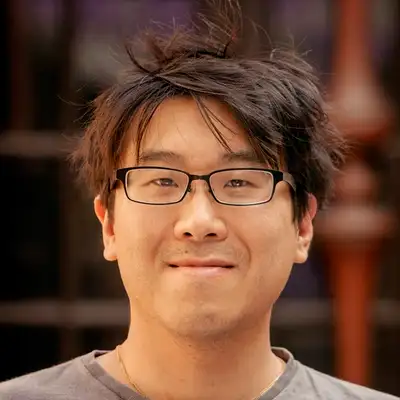
Guest
Garnet Chan
Bren Professor of Chemistry; Director of the Rudolph A. Marcus Center for Theoretical Chemistry at Caltech.