Are We Computing Quantum in the Wrong Base? with Ivan Deutsch
Summary
Every commercial neutral-atom quantum computer today encodes information in just two energy levels of an atom that has many more — strontium has ten nuclear-spin levels, cesium has sixteen. Ivan Deutsch, one of the founding theorists of neutral-atom quantum computing, joins the podcast to ask whether binary is really the right base for quantum computation, and to make the case for spin cat codes: a fault-tolerant encoding that embeds a qubit inside the richer structure of a qudit, the way bosonic cat codes use microwave cavities. Along the way, Ivan traces three decades at UNM — from the earliest days of quantum information science to his role building Elevate Quantum, the only federally designated quantum Tech Hub in the United States.Are We Computing Quantum in the Wrong Base? with Ivan Deutsch
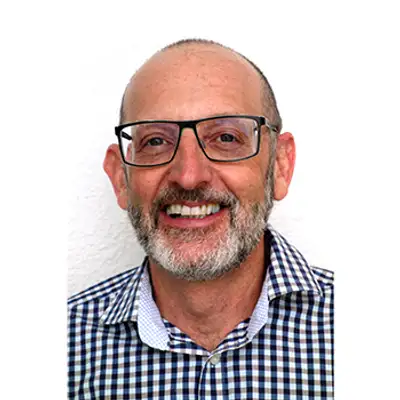
Ivan Deutsch is Distinguished Regents' Professor of Physics and Astronomy at the University of New Mexico and the founding director of CQuIC, the Center for Quantum Information and Control. Along with his longtime collaborator Poul Jessen, Ivan helped lay the theoretical foundations for neutral-atom quantum computing in the 1990s: trapping individual atoms in optical lattices, cooling them to near absolute zero, and shuttling them in parallel to perform quantum logic. The companies commercializing those ideas today — QuEra, Pasqal, Atom Computing, Infleqtion, and the newly announced Aurora out of Caltech — are building on architectural concepts that trace directly to his group's early papers. His 9,600+ citations across quantum information, atomic physics, and quantum control place him among the most-cited theorists in the field.
The reason to talk to Ivan now is that he has been making a quietly heterodox argument: every one of those commercial platforms encodes information in two energy levels of an atom that has ten or sixteen, and Ivan thinks the field should be asking whether that's the right choice — not for information density, which is only a logarithmic gain, but for fault tolerance. This conversation goes deep on qudits, spin cat codes, and the co-design philosophy that has shaped Ivan's career at the interface between theory and experiment, ions and neutral atoms, and academia and industry. If you are following neutral-atom hardware, fault-tolerant quantum error correction, or the emergence of regional quantum ecosystems, this episode is essential.
What You'll Learn
- Why neutral atoms were the "underdog cousins" of trapped ions — and the precise trade-off at the heart of a 30-year rivalry: ions are great and terrible because they're charged; neutral atoms are great and terrible because they're neutral
- What the original neutral-atom quantum computing paper actually got right: the parallel atom-movement architecture now central to QuEra, Atom Computing, and Infleqtion's roadmaps was already there — even if the Rydberg blockade's full power wasn't appreciated until later
- What qudits are and why fault tolerance, not information density, is the compelling argument: the information gain from base-2 to base-10 is only logarithmic, but co-designing error-correcting codes with the physical structure of the hardware may be transformative
- How spin cat codes work: using the extra energy levels inside a single atom for error redundancy, directly analogous to bosonic cat codes in microwave cavities, with fault-tolerant thresholds that may surpass standard qubit surface codes
- Why biased error correction matters: real physical errors in neutral atoms aren't arbitrary, and codes designed around the dominant error channels — including leakage and erasure — can dramatically outperform worst-case generic schemes
- How leakage becomes an asset: when population escapes the qubit subspace into other levels, detecting that escape converts it from an unknown error into an erasure error, which is far easier to correct
- Why working at interfaces is where the creative work happens: Ivan's career has been built at the boundary between theory and experiment, between ion-trap and neutral-atom communities, and now between research and industry
- How New Mexico became a quantum hub: the founding of QNM-I, the partnership with Colorado, and the Elevate Quantum Tech Hub — turning decades of national-lab and university strength into an actual industrial ecosystem
Resources & Links
Guest Links
- Ivan Deutsch — CQuIC Faculty Page — Research profile and publication list at the Center for Quantum Information and Control at UNM
- Google Scholar Profile — 9,600+ citations across quantum information, atomic physics, quantum optics, and quantum control
- NSF Q-SEnSE Research Profile — Ivan's role in the NSF quantum sensing and engineering center
Key Papers
- Quantum optimal control of ten-level nuclear spin qudits in Sr-87 (LANL/CQuIC) — The theoretical demonstration of arbitrary SU(10) maps in strontium-87 with average fidelity ~0.9992; the core technical result behind the qudit computing program discussed in the episode
- Spin-cat code paper (ResearchGate) — The fault-tolerant encoding proposal that embeds a qubit in a large-spin qudit, analogous to bosonic cat codes; fault-tolerant thresholds that surpass standard qubit-based encodings
Talks & Context
- IMSI Talk — "Neutral Atom Quantum Computing with Nuclear Spin Qudits" — Ivan's accessible lecture-format talk on the full qudit computing research program; a good companion to the episode
- Quanta Magazine Q&A with Ivan Deutsch (2015) — Still the most accessible public articulation of his philosophy on qudits and computation
Ecosystem
- Quantum New Mexico Institute Launch (Jan 2024) — The founding of the joint UNM/Sandia/LANL institute Ivan established
- UNM/QNM-I Ecosystem Update (Feb 2026) — The current state of the New Mexico quantum industrial ecosystem, including Quantinuum, QuEra, and QNet presence in Albuquerque
- Elevate Quantum profile — Background on the only quantum-focused EDA Tech Hub in the country
Field Context
- Nature (Jan 2026) — Harvard/QuEra fault-tolerant neutral-atom paper — Up to 448 neutral atoms demonstrating below-threshold fault-tolerant QEC; the hardware milestone Ivan's theoretical work is designed to exploit
Key Quotes & Insights
"Ions are great because they're charged. You can hold onto them very tightly and manipulate them extremely precisely. Ions are terrible because they're charged — you can't push many together and they all talk to one another." — Ivan Deutsch, on the fundamental ion/neutral-atom trade-off at the heart of a 30-year platform rivalry
"I don't want to be an evangelist, because I don't really feel I've studied this well enough to say we really should do quantum computation base-10 rather than base-two. But I think it's an important question." — Ivan Deutsch, on qudits — a carefully calibrated position from a theorist making a strong technical bet
"We just wanted to make the whole thing faster." — Steve Rolston (Ivan's co-author), on the mindset behind the Rydberg blockade paper, which ultimately unlocked the entire commercial neutral-atom industry
Insight: The spin cat code argument does not rest on storing more information per atom — it rests on using extra energy levels to give error correction information about the hardware's dominant failure modes. Co-designing the code with the physics, not against it, is the underlying idea.
"New Mexico is a quantum state." — Ivan Deutsch
Related Episodes
- Ep 18: Neutral Atom Arrays with Alex Keesling of QuEra Computing — QuEra is building directly on the neutral-atom architecture Ivan helped found; Keesling explains the Rydberg array roadmap and where the platform is heading.
- Ep 57: Neutral Atom Qubits with Mark Saffman — Another pioneering neutral-atom theorist; Saffman's perspective on the Rydberg platform complements Ivan's historical account and frames the same hardware from a different vantage point.
- Ep 36: Bosonic Quantum Error Correction with Julien Camirand Lemyre — The bosonic cat code in superconducting cavities that directly inspired Ivan's spin cat code work; the superconducting parallel to what Ivan is pursuing in neutral atoms.
- Ep 56: Bridging Theory and Experiment in QEC with Liang Jiang — Jiang's work on co-designing error correction codes with physical hardware is a direct analogue of Ivan's biased error correction philosophy.
- Ep 75: Regional Quantum Development with Alejandra Y. Castillo — The policy and ecosystem-building perspective on quantum tech hubs; a natural companion to Ivan's account of founding Elevate Quantum.
Stay in the Ecosystem
The neutral-atom and fault-tolerance story is one of the most active fronts in quantum computing right now — hardware milestones, new companies, and theoretical bets like qudits and spin cat codes are all converging. If you want to follow it:
- Sign up for the newsletter at newquantumera.com for deeper coverage of quantum computing research, hardware, and the ecosystem.
- Subscribe on Apple Podcasts, Spotify, YouTube, or Amazon Music so you never miss an episode.
- Follow on LinkedIn or Bluesky for episode drops and commentary.
If this episode made you think differently about the qubit assumption at the heart of every commercial quantum computer today — share it with someone who should hear that question.