Quantum Book Launch with Yuval Boger
Summary
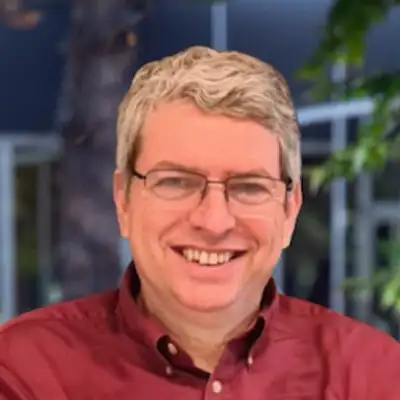
Yuval Boger — Chief Commercial Officer of QuEra Computing and one of quantum's most prolific podcasters — joins Sebastian for a crossover episode that doubles as a working session between two people trying to make quantum computing comprehensible. They compare notes on writing books for non-physicists, debate how close neutral-atom systems are to genuine quantum utility, and dig into why the gap between physical and logical qubits is narrowing far faster than most public roadmaps suggest.Why This Episode Matters
Yuval has a rare profile in the quantum industry: an M.Sc. in physics from Tel Aviv University, an MBA from Kellogg, two decades as a CEO and CMO in deep tech before quantum, and now the commercial lead at QuEra — the company whose neutral-atom architecture is colocated with NVIDIA H100s inside Japan's ABCI-Q supercomputer and just demonstrated 96 logical qubits from 448 physical atoms in Nature. He also hosts The Superposition Guy's Podcast and has just published Quantum Bits, a comic-book guide to quantum computing.
This is a crossover conversation — Sebastian's book A New Quantum Era came out the same week — so the episode reads as two practitioners comparing their explanatory strategies, their reading of the modality race, and their honest forecasts for when a quantum computer becomes genuinely non-simulatable. If you want a candid look at how the commercial side of quantum thinks about hardware timelines, error-correction overhead, and the work of translating physics into procurement, this is the episode.
Sponsor
Sponsor
This episode is brought to you by Outshift, Cisco's incubation engine. The need for computational power is rapidly increasing in every sector. From drug discovery to material innovation to complex financial modeling, classical systems are reaching their absolute limits. It's time for a paradigm shift. The answer is a scalable quantum network, built on open standards and vendor-agnostic architecture. By uniting distributed quantum devices, you unlock limitless computational power.
Learn more about the Cisco Universal Quantum Switch at Outshift.com.
What We Get Into
- Why Vladan Vuletić's confidence horizon for neutral atoms expanded from 5 years to 10 years in a single 18-month window — and what changed
- The honest case for neutral atoms when wall-clock speed is the obvious weakness: parallelism, algorithmic fault tolerance, and a 2:1 physical-to-logical ratio for quantum memory
- Why "time to solution" — not gate speed — is the metric Yuval thinks the industry should be arguing about
- How Shor's algorithm went from requiring a million qubits to roughly 30,000, and what that compression means for cryptographically relevant timelines
- The craft problem of explaining quantum without saying "zero and one at the same time" — and why both Yuval and Sebastian refused to use it
- What it took to make a quantum comic funny in German (the German is perfect, the joke is not)
- Sebastian's read on the modality race: neutral atoms short-term, superconducting mid-term, spin and photonics long-term — and Yuval's pushback
- Why Yuval thinks Sebastian's five-year forecast for a non-simulatable machine is pessimistic
- The shift inside QuEra from "95% science, 5% everything else" to a company that has to ship serviceable systems and uptime
- How podcasting becomes a business development tool once the microphone is off
Resources & Links
Guest Links
- The Superposition Guy's Podcast — Yuval's interview show with quantum CEOs and technical leaders across computing, sensing, and communications.
- Quantum Bits Comics — Yuval's comic-book guide to quantum computing, including custom editions and multilingual versions.
- QuEra Computing — The neutral-atom quantum computing company where Yuval serves as Chief Commercial Officer.
- Yuval's published writing — Aggregated Forbes, HPCwire, and Built In bylines on quantum ROI, workforce, and commercialization.
Papers & Articles
- QuEra and collaborators on Algorithmic Fault Tolerance (Nature, 2025) — The paper behind the claim that syndrome measurements can happen per algorithmic block rather than per operation.
- HPCwire coverage of the AFT result — Independent take on the 10–100x runtime overhead reduction.
- IEEE Spectrum on neutral-atom quantum computing in 2026 — Context for the AIST Gemini deployment and Yuval's time-to-solution argument.
- 2026 Quantum Readiness Report, Part 2 — The survey of 291 stakeholders behind Yuval's "show-me phase" framing of the market.
Books
- A New Quantum Era by Sebastian Hassinger — Sebastian's outsider's introduction to quantum computing, referenced throughout the conversation.
- Quantum Bits: A Comic Book Guide to Quantum Computing by Yuval Boger — Yuval's illustrated explainer, with a glossary covering terms from superposition to QLDPC codes.
Background Reading Mentioned
- The Soul of a New Machine by Tracy Kidder — Sebastian's inspiration for the working title of his next book.
Key Quotes & Insights
- On the magic of neutral atoms: "We've got this rubidium atoms, we hold them in place using tiny lasers, they're four microns apart, we shoot lasers, and then we take a photograph and see how they're doing. It's science fiction until it isn't."
- On the modality timeline (Yuval, paraphrasing Vladan Vuletić): Eighteen months ago Vladan was confident about neutral atoms for the next five years. Six months ago, after recent results, that confidence horizon stretched to ten.
- On what actually matters: "Obviously what matters is time to solution and not clock speed." Yuval's core rebuttal to the standard critique that neutral-atom gates are slow.
- On the error-correction compression: A recent Harvard result showed the physical-to-logical qubit ratio for quantum memory dropping toward roughly 2:1 — not the thousand-to-one figure that dominates most public discourse.
- On the takeaway from his book (Yuval): "Quantum is magical, but it's not magic."
Related Episodes
- Episode 18 — Neutral atom arrays with Alex Keesling of QuEra Computing — Sebastian's earlier conversation with QuEra's CEO on the foundational technology.
- Episode 23 — Dawning of the Era of Logical Qubits with Dr. Vladan Vuletić — The 48-logical-qubit result Yuval references, straight from QuEra's CTO.
- Episode 57 — Neutral Atom Qubits with Mark Saffman — A complementary perspective on neutral-atom scaling and Rydberg interactions.
- Episode 81 — Quantum LDPC error correction with Larry Cohen and Paul Webster — Goes deeper on the QLDPC codes that underlie the compression in physical-to-logical ratios.
- Episode 47 — Megaquop with John Preskill and Rob Schoelkopf — Context for the "near-term useful quantum machine" framing both Yuval and Sebastian are circling.
Stay in the Ecosystem
- Subscribe to The New Quantum Era on Apple Podcasts, Spotify, YouTube, or Amazon Music.
- Sign up for the newsletter and find Sebastian's book at newquantumera.com.
- Follow NQE on LinkedIn and Bluesky.
- Share this episode with a colleague who's still being told that qubits are "zero and one at the same time."