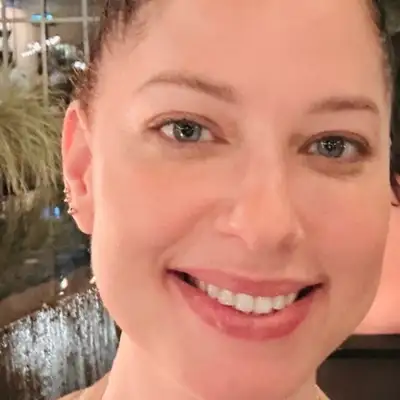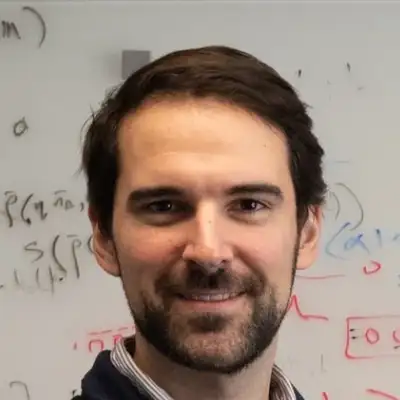
Quantum Cameras and Sub-Diffraction Imaging with Johannes Galatsanos
Summary
What if a camera could skip the JPEG entirely and process photons at the speed of light, extracting information that conventional optics leave on the table? Diffraqtion co-founder and CEO Johannes Galatsanos joins Sebastian to explain how a quantum-inspired imaging device — built on quantum Fisher information theory — can see beyond the diffraction limit and run neural network classifications directly in the photonic domain. It's a candid conversation about what "quantum" really means in quantum sensing, why space is the first market, and what quantum sensing needs to break out of quantum computing's shadow.Sebastian Hassinger • 00:01
This is the New Quantum Era. I'm your host, Sebastian Heisinger. My guest today is Johannes Galatsanos, co-founder and CEO of Diffraction, a Boston-based startup building what they call a quantum camera for satellites and telescopes. But before we get into our conversation, this episode is brought to you by OutShift, Cisco's incubation engine. The need for computational power is rapidly increasing in every sector. From drug discovery to material innovation to complex financial modeling, classical systems are reaching their absolute limits. It's time for a paradigm shift. The answer is a scalable quantum network built on open standards and vendor agnostic architecture. By uniting distributed quantum devices, you unlock limitless computational power. Learn more about the Cisco Universal Quantum Switch at outshift. com Johannes Galatsanos came into quantum by a route I find interesting. He spent years building AI and data teams in industry, including running the data and AI group at Novartis, and along the way became convinced that if you were going to bet on quantum, it was better to be on the building side than the applying side So we went to Oxford, then to MIT, where he ended up co-authoring the inaugural MIT Quantum Index Report with the MIT Initiative on the Digital Economy and Accenture. That report is essentially a data-driven map of the quantum landscape, and it means Johannes is one of the few founders in this space who has looked at the entire field from altitude before staking his career on one narrow and frankly underhyped corner of it, quantum sensing and imaging. The technology diffraction is commercializing came out of Sikat Guha's lab at the University of Maryland where the original DARPA-funded work was aimed at, of all things, finding exoplanets, extracting signal from photons that direct imaging simply throws away. The claim grounded in quantum Fisher information theory is that a conventional camera in certain regimes can lose roughly 95% of the information a photon actually carries. and that you can recover a lot of that by processing the light directly in the photonic domain before it ever becomes an electron, before it ever becomes a JPEG. Now, whether that makes this device a quantum camera in the strong sense of the word is a real question, and I'll push on a bit in our conversation. Johannes is refreshingly honest about the gray zone he's operating in, the interplay between quantum information theory, photonics, analog computing, and neural networks that run at the speed of light. We talk about how the current generation works, what the reprogrammable next generation unlocks, and why a backpack size CubeSat with a ten centimeter aperture is a genuinely disruptive proposition for space domain awareness and Earth observation. We also get into something I've been wanting to talk about for a while. Why quantum sensing, despite being closer to deployment than quantum computing on many axes, still runs under the radar. Johannes has thoughts, and they come from someone who both has the data and the scar tissue. of raising money in the category. It's a conversation about a specific device, but it's also a conversation about how quantum technologies actually reach the world. Here's Johannes Glatzinos. Johannes, thank you very much for joining me. Thanks for your time. Um I wonder if If you could start off by talking a little bit about your origin story, how you got to where you are now as CEO and co-founder of Diffraction.
Johannes Galatsanos • 04:03
Yeah, thanks for having me, Sebastian. Um so yeah, Johannes uh or uh Yanis, I'm Greek uh German originally and uh grew up between the two countries. Um uh lovely island in Crete, um then uh moved on and did studies in AI in uh in Germany and after actually I wrote my thesis in AI back in 2010 uh which was kinda in the early AI days and um started working in uh all kinds of AI applications like drones, uh you know industrial inspections, um automotive um automations and ultimately landed up in building the data and AI team at Bobartis, which is a pharmaceutical um company and um they're spent uh quite a few years building up a team from scratch that uh was bringing back data and AI capabilities for the company. And at the time I got in contact with uh quantum technologies too because I was responsible for also looking at innovations and new new tech that's coming out. So Um I got introduced to a few folks that were doing quantum POCs. I looked into it and I tried to map it somehow what we do actually in the company and it seemed to me that it was quite far away. This was around 21, 22 or so. But I did realize the potential for the upside if you actually build something in quantum versus you just using it and having like a side project for a couple of years in quantum, right? maybe one two PhDs out of two hundred people in your team, right? So I think, you know, why not be on the other side where I actually built this? Because that's gonna be a massive upside. You just need a bit of patience. So I thought I should go to um uh to the best places to find out about quantum tech and where to even uh spin out some technology like that. So I went to first to Oxford and then to MIT And um at MIT I started working in the uh in quantum research for uh optimization algorithms, uh, for quantum uh for um uh and uh benchmarking of of algorithms for um drug discovery specifically. So I wrote my thesis in that too there at MIT. And at the same time started building the quantum index report, uh, which was basically again a benchmarking of all uh QPUs and then also looking at uh papers and uh publications, patents and everything that's being released by country, by university, and so on to kind of keep track of uh how quantum's progressing over time. Uh and at that time I met uh Sikart Guha, who's a professor at UMD, um who runs the Center for Quantum Networks, which is an NSF uh engineering center, actually the largest of its kind in quantum tech. And um when I'm at Sycard, he told me he's looking for aliens. So I said, hey, that's awesome. Um how are you doing that? He said, Well I have this really cool camera that can see sub-diffraction. And um then, you know, we we uh I looked into it and uh DARPA came um DARPA had sponsored his research for about 13 years in the in the past. um of developing this from TRL zero, so basically from idea or concept um to TRL four, which means um it's already shown in the lab. And um DARPA gave us um funding for starting the company, so we we got 1. 5 million from DARPA to kick start the faction. Um And bring this camera to to the market. And um we in the meantime then we also raised some funding. Um and now yeah, we're in Boston. uh or somewhere right outside of Boston. I mean you obviously you've been here uh uh recently and um we have now twelve people in the team um have uh photonics labs here, both manufacturing capability and testing capabilities, um, and bringing this quantum camera to life uh together with my third co-founder, Christine Wang. who is a Harvard PhD in quantum optics and spent the last 20 years in uh quantum optics, commercializing quantum optics in dual-use use cases. Um, and she came from Federico Carpaso's lab. So we have kind of the Harvard MIT ecosystem and one company.
Sebastian Hassinger • 08:23
Yeah, that's quite the powerful axis in in Boston between MIT and Harvard. Similar sort of axis to of of uh brain power that that fuels Q era between uh Voletic and and Luke and Slaps, right? Yeah. So it's a good pattern, definitely.
Johannes Galatsanos • 08:39
Yes. It is, yeah. And we love the Boston area too, you know, there's tons of talent here. And for what we do at intersection like photonics, um quantum tech, we have them optics, um, AI, and then space, uh, I think Boston is a pretty unique place. Um and of course we all had our connections to the MIT Harvard ecosystem. So it seemed like a no-brainer being in Boston and having this this intersection of technologies here.
Sebastian Hassinger • 09:07
That's amazing. And and so it's a quantum camera that you're developing. Can you walk us through what exactly i are the elements of the camera that are our quantum information technology?
Johannes Galatsanos • 09:20
Yeah. Maybe I'll start with what a quantum camera is and then ask the second question why it's quantum because I get that a lot. Um all right, so maybe first with the camera itself, what does it do? Uh the camera can do two things effectively. So one is think faster and the second uh further see further and the second is think faster. So It's also in our motto, see further think faster. Now, uh see further means that uh this camera can break the or can see beyond the de facto limit. The diffraction limit for those who don't have a physics undergrad or don't remember high school physics, it is um the last letter you can read at the optometrist, you know, when you when they make you read these. The last letter you can read and gets blurry, that's your eye's diffraction limit. Now um that is a physical limit that um is uh bound uh because of the uh because of Rayleigh. I mean that we also call the Rayleigh Limit, uh Lord Rayleigh who who came up with that concept. Um and the idea is basically that two point sources that come or let's say two two light sources that are very close to each other, they look like the same thing when they're too close to each other at a long distance. So they to overcome it as you get normally you get a bigger lens, right? That's the only way to do it. You get a bigger aperture. And that's how you see further, right? Now for us That's why we end up with telescopes with enormous lenses, right? Yeah. Exactly. That's the concept of why to see further, especially in space where it's interesting, you get telescopes. Um now the um this chrono camera can actually see beyond uh or extract information beyond that diffraction. Um and I'll explain a second how it works, but that's the first benefit. The second benefit is think faster. So what you can do with this is you can run Um uh you can run things like classifications, uh which is kind of a convolutional neural network, like a concept from uh artificial intelligence for machine vision in particular, you can uh run that in the photonic realm and so basically just with photonics without using electronic components And that allows you to do this whole thing at speed of light and at a very, very low energy consumption. So practically negligible. So that's the think faster part is like doing inference and classifications at speed of light Uh so these are the two main benefits and why we built this camera. Now um I'll go maybe to the second part, maybe why it works and then also explain a bit why it's quantum. So why it works is a simple concept that um Sigurd was looking into, which is uh called the quantum Fisher Information Theory. And that one tells you how much information is contained in our case, specifically in a photon And uh what Sycard found out and before him also there were uh um a group of researchers that were looking at subtefaction imaging and What they found out is that when you do direct imaging, so when you capture directly the photon and then you convert it either into uh a film or a JPEG or some sort of digital information, then you are introducing loss. And so you're not extracting the maximum that quantum theory allows you to extract from that photon. And turns out in many use cases like he was looking at, and that's kind of going back to the finding aliens, uh, the use case he was looking at initially with NASA was um you are looking at a very faint object which is a planet that is orbiting uh a star very far away. It's called an exoplanet. And then that planet you cannot directly see it because the star is too bright Um normally what you do is the the planet goes around the s the star and then at some point you see a dip in light and you know okay that's a planet about that size. But if it doesn't directly orbit in the same plane, it's very hard to see it. So Um what NASA was looking at is novel ways of extracting that information, detecting is there really a planet around orbiting uh that star. And um When you do a direct image, so we and you have a telescope and a camera behind you, you take an image of that, you lose um in that case, something like 95% of information. from that photon. So you leave 95% on the table, and the question was right, how do you extract that back, right? Now part of the reason of why you lose information goes back to short noise. So short noise is introduced when basically the the the photon um is spread out and you know then an electron is excited, right? And then you get a um you basically create a an intensity right matrix which is then becomes a JPEG, which is basically what a JPEG is. When you do that, you introduce short noise because light doesn't like to be observed, right, as we know. So when you convert the light into electronic information, you lose the information. Now then he said, okay, how do I do it differently without converting the light to electronic information? So you cannot sense you cannot really convert it or capture it into electronic information. That's where you lose it.
Sebastian Hassinger • 14:32
So I mean either th the visible spectrum or or the the the electronic uh um you know photoelectric kind of uh reaction, both of those are essentially going from uh a quantum particle to a classical sort of level and th there's some loss inherent in that in that conversion from quantum to classical. Okay.
Johannes Galatsanos • 14:52
Yeah, yeah, exactly. That's that's another dimension to it, which is kind of uh explained by the shot noise practically, right, that that you introduced by doing by doing an observation, right? When you do observation, you introduce uh loss. That's that's just uh you know physics fundamental. Um now uh the uh you know the the alternative idea was all right if we cannot observe it directly right I cannot convert it what can I do alternatively is I can process that photon And that kind of is the same concept you use in a photonic quantum computer, right? So y you can process photons, right? So you have basically in that case you have kind of gates, right? In our case, but what is behind that is um uh basically co uh componing uh components that's uh for that you'll use for quantum computing um that um could be something like uh a faceplate or a modulator, right? So These kind of things that you would use, we can actually use to process light directly as it comes to us. Turns out from the scene too. So from what nature created, right? Nature created a scene by sunlight or by artificial light hitting uh a surface and then getting into your eye, right? That's how you absorb the information. So the quantum state is already created if you want, right? So you already have a perfect perfectly beautiful scene that you're getting. And now the idea is how do you process that to extract some information? And what PsyCard found out is a way how to do this in the hardware, so actual hardware. And you can actually process hardware uh or process that this light with hardware in the photonic realm to extract some information. And what we extract there's different algorithms you can run on this basically computer if you think of it like a photonic computer. You can run different algorithms. One that we do is uh counting. So for example you can count the amount of sources. Or you can count the amount of let's say cars on a parking lot, which is interesting for let's say trading companies who try to assess how many customers go to uh let's say to Walmart, right? But you can also uh do classification. So you can say is that um let's say a satellite or is that you know debris or what is that that I'm looking at? So um you can run all these types of classifications with what we call an optical neural network. So you can actually process light um in the same way or seen in the same way as you process it digitally, but you can do the whole thing fully optically. As well as I mean diffractive neural network.
Sebastian Hassinger • 17:27
And is that is that sort of analog computing or c or information or or is it truly quantum information processing?
Johannes Galatsanos • 17:37
Um right. So this is basically where this uh question gets a little bit trickier on what exactly you call quantum, what not, right? So um I guess many people would call this in a way um because we don't uh create entanglement, um and we do not use entanglement in that sense, at least not originally, that uh means it would fall under what we call like quantum one O, right? So you some people would call it quantum inspired. Um it might be like a term that fits or quantum one oh you can call it quantum sensing if you want. Um although quantum sensing again is more you know, magnetometers, you know, atomic clocks, things like that that are mostly used for it. So this kind of falls in between categories, so I don't think it's like a clear stamp, but Effectively, one what you try what you're doing is you are extracting the quantum limit of information, so that's important. To understand what is the limit, you have to build your algorith your device in a such a way um that uh it uses quantum algorithms to configure it. So you do use quantum uh information theory and actually Cycard is a professor in quantum information, so that you know that's where it came from. Um so I think the genesis of it is extremely closely tied to quantum communications and quantum computers. uh quantum information theory. What we actually run, you're correct, is um classic, uh classic optics or photonics if you want. So that one would be more ached to an analog computer. um and analog processing um which we like a lot. So actually I like that a lot about this because it makes it so much easier, right? So you like you don't have to dabble with uh you know uh um cryogenics and you don't have double with massive devices you can actually make it so small that eventually will fit in a cell phone. Um so you can make it super small, you can make it relatively cheap, and you can you don't need to bother about um cooling cooling it down to some extreme temperatures to work. So I did like that part that we do not overcomplicate it. Um, but it still works today. So that's the appealing part of it.
Sebastian Hassinger • 19:49
Yeah, yeah. Yeah, and I mean, as you said, there there's there's there's all sorts of elements of quantum information. I mean, you know, the the Clifford Gate set, for example, are easily simulatable, so there's there's all this sort of gray area between uh something that is directly, you know, entanglement or superposition dependent and um and the the fully classical realm. There's this uh pretty broad expanse. And what what's really interesting to me about what you're doing is There's a direct sort of parallel in my mind immediately between your device and the early sort of electronic era before uh universal classical computing was widespread and the microprocessor was a commodity. We had all of these purpose built devices that were using electronics to do signal processing or a sensing of some sort or I mean transistor radios, TVs. uh guidance systems, radar, all of that is sort of um in some ways I think analogous to what you're doing. You're you're using the engineering and the science that's emerging in this category of quantum to make a device that's that's realizable now that has specific uh use cases you can address today, really, it sounds like, right? I mean you've got you actually have devices that are are operational now as opposed to more esoteric quantum quantum computing, which is still in the works, as it were.
Johannes Galatsanos • 21:17
Right. Right. I think that was a little bit the thought process that I followed when I when I looked at this. So when I was looking to spin out a quantum technology, I also thought about um maybe uh you know actually, you know, quantum computing, right? Uh you know, let's find a technology and build a photonic quantum computer or uh that is slightly better in XYZ dimension, right? And then can beat another one. But uh to me again it was a game of hey five, ten, fifteen years, whatever to be like um cash flow positive, right, from actual revenue and not just government grant. And that one would be it's a long journey, right, that you have to go through And um in this case, to your point, yes, this camera already works, so it's TRL 4, which means it was demonstrated in the lab to have already benefits. uh now benefits to the best conventional camera actually uh you know in the lab we have like a camera cost fifty thousand bucks and it's like um It's liquid cooled, right? Because it creates so much energy and heat because it's so powerful. And that's the best thing you can buy today. Um, we compare to that, and then we can beat it by factors of, you know, orders of magnitude better So that's something that works today. And actually we have the first uh we call generation zero, but the first camera, uh, which is a pure proof of concept, we have that Uh we had that up in University of California on the telescope. Uh it's a large three-meter telescope that the University of California is using uh near Sao Jose. and um did astronomical tests so now we keep doing at different observatories these kinds of tests. We have a couple of telescopes here that go on the roof uh right here in Boston that we can uh test the initial versions. And these initial versions already beat conventional imaging systems. Um and that was important for me to to pursue something that is really useful today. um not just in ten years, right, beating a conventional technology.
Sebastian Hassinger • 23:12
You mentioned uh not just resolution but speed. Is there is there some correlation between the speed of processing and the effective frame rate or sample rate that you could potentially produce?
Johannes Galatsanos • 23:27
Yeah, so this is where things get interesting because there's no frame in that sense, um because there's no shutter, right? So Um the light is processed at speed of light, basically as it goes. So as long as you have enough photons, and you know there's always a photon budget where you receive enough photons to trigger something. But as long as you received enough photons from the source that goes basically through in this process, and you have detected that particular object, you have done the full processing. And that is measured in time obviously versus frames. Um and then the frame in that sense comes when you read it out. So when you have a readout of that camera. So at some point you need to convert it to electronic information so that your machine can do something with this, right? Because otherwise it's just light flooding around. So you want to convert it at the end. At that point of conversion you have obviously loss and you have um Uh you also have basically a time loss, right? Because you need to you're constrained to the power of a processor. Now interestingly, there the only reason we have to do that is because conventional computers are too slow for our camera. But Um which is funny, but I think eventually, and this is kind of where it will get very interesting, as I'm I'm sure we will find other ways to extract this information and not have this loss introduced, but Because it's already processed, really. You you already did the calculation. You don't need to really read it out electronically. But if you do, uh you lose a bit of time. That's where a frame comes in. Um And but again, as long as you have enough photons, you have an instant recognition of the scene or of of the classification. And I can tell you yes, I'm looking at a dog or a cat or a car or a bird or a satellite. Um so That's enough.
Sebastian Hassinger • 25:17
That's so it's so fascinating too that I think it's worth sort of uh repeating what you were saying. Essentially, there is no um imaging the way humans think of of imaging. You're sensing the photons directly and compute processing the photons directly without the intermediary of representing it digitally or chemically in the case of photography or classical photography. Like that's such a interesting you're you're basically taking photonic information and feeding it directly into a neural net. without the intermediary step that that is really dependent on human biology rather than than than the the information.
Johannes Galatsanos • 25:57
Yeah, yeah, correct. Yeah. And and I mean The idea of it, uh you know, think faster and see further. Our markets that we're going into is initially obviously uh satellites and space. So we have we work with Space Force and NASA for um for applications like um you know when you have debris in in orbit that is trying to hit your or might hit your satellite, especially as now millions of satellites go into space. Um you want to make sure that that's basically safe to operate. It could be, you know, it could be another satellite hitting you, it might be accidental or not. Uh so in all these scenarios you want to know what's going on in space, right? And um there we have the application which is space-based. But future uh you know a lot of that happens in a satellite onboard processing right so you want the satellite you know these things fly at twenty thousand miles per hour right in low earth orbit and then you have two objects both flying at twenty thousand miles per hour They, you know, that you're talking about, you know, massive distances that you have and then you have seconds to react. So at that point you want to have onward processing. So if you first have to take a JPEG, send it down to an operator, and then operator says, you know, by the time it's down, you know, the thing is already blown. You know, so at that point the accident has happened. So you want to have onboard processing and the satellite or the machine that is doing the onward processing has to do it in the most efficient way possible. And converting it into a JPEG first and then having a whole GPU trying to replicate what the heck happened in this JPEG, right? So That is two layers which are actually kind of unnecessary if you think about it, because if you could do the whole thing at speed of light and get an inference at speed of light why bother doing two conversions and b send it back to the machine?
Sebastian Hassinger • 27:46
You're effectively giving the satellite a a a photonic sensing device that could, you know, that that can sort of round trip through its own logic processing without any of the intermediaries that are are human dependent.
Johannes Galatsanos • 28:00
Correct. Yeah. And the machine doesn't need those intermediary steps as long as you have the information extracted, right? They don't care about an image. um as long as they know go left, go right, right? Um or stay on course. Um they don't need to necessarily get a JPEG. So JPEG was a little bit of a I think a logical step. And the way I think about it is, you know, humanity always had these logical steps like, okay, first you did, you know, um uh uh paintings, right? So you had uh cave paintings, right, in the ancient forum statues, then uh you had you discovered at some point you can put it on a canvas, right? At some point film, okay, we can actually take real pictures now of things. Um and then digital pictures, right? So kind of evolved on imaging. Um, but now the thought is, well, let's go even closer to nature and say, forget about you don't even need that. You the light itself already will tell you uh you can process it directly in its most pure form. Um so I guess like many things it moves from digital to quantum, right?
Sebastian Hassinger • 28:56
Yeah. It reminds me of um you know, I I remember reading about uh th the the cones or the rods that are are uh are configured in a certain way in a frog's eye where if a certain pattern gets triggered their tongue fires up because it's it's essentially sensed a fly and there's no round trip to the from the brain through the the opticals uh sensor. It's just It's like, you know, photonic to like tongue trigger basically.
Johannes Galatsanos • 29:25
Exactly. Yeah. So actually we have if you go on our website, we have this example with the eye, and actually the the eye has um what we call retinal ganglion cells. So these cells are actually to your point doing exactly that. So they can process shapes and um trajectories. So they have in you know, scientists have taken out, you know, an an eye detached from a brain and shown it like shapes and and they could actually react so they would fire up like neurons. And um that is happening way faster than your brain and for animals, actually for humans too, like if you ever caught a baseball, um, that was actually your eye, not your brain, doing the thinking because you need to very quickly grab it or if you dropped a fork or something and you quickly grabbed it and caught it, that was your eye doing the thinking, not your brain. That's actually directly tied to your reflexes. So um it's uh very you know, that's why we think about it like a quantum eye if you want, right? Like a better eye for your satellite, for your car, for your robot
Sebastian Hassinger • 30:23
That's really cool. And so you've mentioned um a satellite. When I visited your lab, you had a a mock-up of what that that satellite looks like. It's quite a bit smaller than I think people are used to thinking about with satellite. So it's it's following the CubeSat uh uh format, right? Can you sort of describe what that that first device is and and when it's going into space?
Johannes Galatsanos • 30:48
Yeah. Uh so actually it's quite handy because it's it's CubeSat uh a CubeSat is basically backpack sized. It fits exactly in a backpack. I know that because I have a backpack with it and I go to all these conferences to show people the actual product. So it's actually quite handy. It fits exactly in a backpack. But um it's uh it's pretty small and the camera itself is is one sixth of that. It's 10 times 10 times 10 centimeters. So it fits quite neatly into that. And think of a couple of cell phones stacked on each other, like maybe five, six cell phones uh stacked on top of each other. So um that's the size of the camera. Now um that CubeSat usually is sent to space by to test a new um type of sensor or an academic group, like a university, might have a little CubeSat program, right? Because they're quite cheap to send to space, uh, they're quite cheap to procure cheap to procure. So that's more like a test bed normally. Nobody really uses them for effective things to do Now, in our case, that little CubeSat with a tiny lens, which is only a 10 centimeter aperture, kind of small lens Um that one um can from low Earth orbit looking back to Earth see something or classify something the size of your laptop. Right. So that's usually reserved to something which is the size of a school bus, right? That's what people think about when they think proper observation satellites in space. You know, if you or if you go to NASA's uh webpage now you will see the Roman telescope. That's the size of a small building, right? So at that point you have like massive telescopes that can actually see things from that far, but um those are obviously, you know, special purpose, very, very um fine instruments that go up there. But they also cost you like a billion dollars, right? Or a hundred million to a billion dollars or even more. And um that little cubeset costs you three orders of magnitude less. because it's so small. So in space the euro economics go a bit wild, right, with size and weight. Um so if you get something that is this small uh in such a small size that benefit of um having a k having that whole thing in a cubesat uh makes makes a lot of sense. And that is also where the C further part really makes a difference. Um but also the thing faster because the other problem satellites have is they can only like any machine really can only process about one in ten images. Um And that's because of um weight and power restrictions in your at the edge, right? So in the satellite. And that ends up that you can only capture one in ten process one in ten images really downstream. Now with this one, because it's constant processing at speed of light, you can process everything and send down small packets of kilobytes down to the earth. So you also have instant uh thinking, right? Um not just High resolution, but also instant um down processing and downstream of information. And that little cubeset um will go up into space Um the first kind of working version that actually is useful for something is about twenty-eight. Before that we likely have another launch uh or launches or like test launches of initial uh draft versions of the camera. And uh getting a bit flight hero dutch, right? Testing the whole system. But uh the main um yeah, the main launch um will be twenty twenty-eight.
Sebastian Hassinger • 34:13
Very cool. And so I mean the the on-satellite uh sort of uh avoidance kind of functionality and the earth observation functionality, I can Clearly see those being, you know, dual use in the sort of the classic sense. You're also I believe you're you're um part of the discussions about the habitable habitable worlds uh uh which is sort of NASA's next generation of uh successor to the James Webb telescope, right? Is that is that a similar form factor? Are you thinking something much larger for that that particular application?
Johannes Galatsanos • 34:51
Yeah, so the Habitable Worlds Observatory is the um the the big telescope, NASA's big planned telescope for the next decade. Uh so they always have these decadol uh telescopes that are um pushing science to the next frontier. The last one was James Webb. telescope uh which has produced these beautiful images um that you can see uh floating at least on my LinkedIn or Instagram so you see them periodically floating Um and that was and before that I guess the first one that people really know and might associate is the Hubble telescope, right? So that was kind of the the original. The Hubble telescope's floating around the Earth, so it's in low Earth orbit. Um that has some downsides to it. Um so the the next one is actually coming up in September. It's called the Roman telescope. Um that's gonna create some beautiful pictures and find more exoplanets. So the next one planned after that is the Habitable Worlds. Um that um the the research for that um was also uh uh and and uh the group there at NASA was sponsoring the development of our camera originally when Sycard's lab. And um that telescope is gonna be a massive telescope also next to the Roman and uh the uh Uh and the James Webb telescopes, they will fly around very closely in in Lagrange two-point. Um, so about four times behind the moon, basically, if you think about it. and um that one will take amazing pictures and find um exoplanets. And the camera in that case that we would put in is not much larger than that, honestly. So surprisingly it's pretty small still. Um But uh it will have obviously some uh much more sophisticated algorithms and and photonics and optics in there. That's gonna be next generation, not the current generation obviously that we have. Um, but that is going to do a few things. The first, maybe most int interesting thing is called coronagraph, where you if you look at you know, if you look straight at the sun on daytime, you will get blind, right, because it's like so bright. But if you put your and if a plane passes there you won't be able to see it directly, but if you put your hands like against the sun in front of your eyes or you block it out, you can still see the plane floating, right? So you're not completely blind. It's the same concept called a coronagraph. Um so you basically blind, you know, block out the the sky uh or the particular um star and then you can look at the exoplanet So that was the main application for it. Um and turns out uh you you can correct, so running an algorithm in our device, you can actually correct for very bright sources and look at dim sources. that's called a chronograph. So we can operate that that way purely by processing the light and extinguishing bright sources. So anything that was blinding you, you can extinguish it and look back. On the size factor, just to get a reference, our to uh our camera that was put in the three meter lick observatory in California. This was a observatory, it's the size of a skyscraper really. And then this whole massive light comes through. and then goes in a tiny camera and the camera actually the if you see it the chip, the chip could fit in your cell phone. So you make a entire, you know, a a skyscraper converting into your cell phone sized camera. Right. Which is for me Bonkers, but you know, this is optics, right?
Sebastian Hassinger • 38:14
Yeah, yeah, yeah. Yeah, and I mean all of these different use cases and even as you were saying, uh potentially getting it down to something that could fit in a car or or as a as a camera or an iPhone or a smartphone Uh the the algorithm is really what varies, and the algorithm in each of these use cases is embodied in a series of I think you refer to them as programmable plates, right? There's you actually are are hard coding essentially the algorithm in the design of the camera for that particular use case. How how flexible is that that set of of programmable plates and and how hard is is it to embody a a new algorithm a novel algorithm in those in those plates for a camera design.
Johannes Galatsanos • 38:57
Yeah. So the current generation is hard-coded. Um that's why we're kind of limited to a few use cases per per device. Now the next generation that we're building here is uh actually not hard-coded, so that's kind of our you know the the secret sauce kind of of making it making it work flexibly That one does not have limitations on what algorithms you can run, or you can even run them successively. So you could run 50 algorithms successively after each other. And that's where it really gets interesting. So that's our Gen 2 camera. And the Gen 2 uh will be able to build um so let's say do classifications on the fly. So let's say um we just won uh an award uh last week or two weeks ago from NASA called uh Space to Soil, which was our use case was detecting illegal deforestation in the Amazon uh before normal uh um uh before normal satellites can do that because they're just too expensive and too slow to process this data. By the time you're done the loggers have left, right? So our technology, we propose to put it in a satellite, a CubeSat, fly over, anyways, the satellite is orbiting the Earth all the time. So at some point you're passing the Amazon. So you can run an algorithm that just detects for a canopy, right? So the missing canopy or not. Now when the satellite flies over, so it flies further from the Amazon. Now it's going, let's say um a bit over the Atlantic. Now you can run uh let's say looking for ships, right? But you're not gonna look for canopy on the on the Atlantic. You're gonna look when you're on the Amazon. So um doing that you can reprogram it while it's in orbit and send it new algorithms. And the idea is that you can run um you know, probably I don't know what the limit would be, but technically unlimited amount of algorithms um basically on the firmware. And what the firmware does, the camera just adjusts the plates basically in a way that works for that particular algorithm, but you shouldn't have any limitation for that. Um the only limitation you have is wavelength basically. It's uh but you can do uh multiple wavelengths.
Sebastian Hassinger • 41:05
You can do any wavelength, you just have to pick one basically Hm. Interesting. And I mean, that sounds like as you continue to develop this this technology, I mean How close are you going to get to to universal computing eventually if you just sort of extrapolate out, you know, if if the programmable plates are infinitely programmable, then Theor I mean I would assume that's almost like an optical Turing machine, right? The tapes moving back and forth, right? Like Yes.
Johannes Galatsanos • 41:32
Yeah, in a way it is, yeah. But uh you have some practical limitations in the sense of Um each layer that you do introduces loss. So you do not want to create, I don't know, you wouldn't recreate a neural network the size of like you know ChatGPT, right? hundreds of nodes and uh uh hundreds of of layers, right? Because at that point you've introduced too much loss uh to to to make it interesting. And you know, you do one processing at a time, like you know, when you've been there. So I'm not sure this is a fully you know Turing complete uh computer in that sense, but we could see it um Uh yeah, I I I I need to see how far or maybe ask Syka also how far we can get with uh in the universal computer.
Sebastian Hassinger • 42:20
I can imagine looking back in the future and thinking uh this is as almost like the the photonic babbage difference. engine, right? Where it's like it's very it's a limited sort of form of a of a proto-classical computer device. It could be. That's really interesting. So so okay, so to you know I I want to um touch on before we finish up, you uh talked about the um the market uh research that you did at MIT, the QII QIR report, um, or quantum information report. That's really I mean it's really unique that somebody who's an entrepreneur in the quantum technology space also has that background as with very broad market analysis and and uh and research. I I'm curious because of that, I'm really curious about your perspective about sensing in particular. I mean I can see why you chose sensing in this technology in particular TRL four is a much shorter runway. But from a public perspective or uh investors, policymakers, enterprise decision makers, sensing feels like it's still running under the radar. And so I'm curious on your perspective of like what what is needed to to really, you know hit the gas in terms of the potential for quantum sensing as a category. Is it is it m um you know more investment? Is it are there regulatory policy or or is investment from the public sector? What what's sort of the the missing piece, I guess?
Johannes Galatsanos • 43:50
Yeah, I think one missing piece honestly the main missing piece is a bit PR, to be honest. So The quantum computing itself, I mean, took a long time to to to take off, right, from um from its origins, but One of the you know, the main thing around quantum computing is that everybody was kind of pulling on the same string of like, okay, this is a quantum computer, this is what I would be able to do. And then if somebody, I don't know, QR comes up with something cool, then chances are the same thing can be used for Pascal or um maybe even superconducting, right? So You can chances are you know everybody's kind of pulling on the same string of saying, hey, here's quantum computing, let's explain it to lots of people. Here's a McKinsey report, here's a whatever Deloitte BCG report. Um people talk about it. Um if it's in the media, you know quantum computing is quantum computing, so people kind of get it. Quantum sensing suffers a bit from the fact that it's multiple things kind of come together. So it's not like if you believe let's say in magnetometry then and you know you use some then you're just thinking, all right, um, that's a useful application, but each technology has like different angles to it, and some are more meant for a medical device and some are more meant for Remote sensing, so each again you have to explain it from scratch kind of and why this particular device will work well in that environment. So that was kind of also my issue when I was fundraising or trying to explain it. Um you have to create your own narrative that explains this particular technology and why it helps. You cannot just tap on an existing narrative and say, Oh, we just built quantum computers. I don't need to explain you what a quantum computer is. We are just better than the other guys because we have XYZ benefits. So you're kind of stuck in that narrative. And Um, I'm not sure this is necessarily super easily solvable just by the nature of what this is. It's so you really have to stick with your narrative, but I do think in quantum sensing we can do a much better job of um both kind of explaining it with a more um kind of unique narrative or unifying narrative across and make it easier for people to understand why quantum sensing is interesting, why it's near term, right? All these kind of benefits of quantum sensing. uh less complex, less capital intensive, more near-term, um real life applications that are very close or already being um uh already you know already applied and lived with um and push a little bit more around um public funding and also VC funding, right? Because both are necessary. But I think that being said, the recent executive order just came out kind of a week ago or so um on quantum also mentioned specifically quantum sensing and then directed um, you know, DOW, NASA and so on to have and DOE and others to give uh a quantum strategy and quantum sensing, quantum computing. Um so for quantum sensing in particular, we have seen a couple of things that um uh memos from from uh departments that uh explained very well of like, hey, this is um you know quantum sensing we want these kinds of things and uh we want to push it further. So that seems to gain more traction which is very positive to see yeah
Sebastian Hassinger • 47:13
That's great. Well, thank you so much, Johannes. This is really a fascinating conversation, a fascinating piece of technology, and I can't wait to see or uh hear about I guess and w see images from hear about what kinds of results you're getting from your camera. So thank you so much.
Johannes Galatsanos • 47:29
Well thanks so much
Sebastian Hassinger • 47:31
Pleasure this episode was brought to you by OutShift, Cisco's incubation engine. The need for computational power is rapidly increasing in every sector, from drug discovery to material innovation to complex financial modeling. Classical systems are reaching their absolute limits. It's time for a paradigm shift. The answer is a scalable quantum network built on open standards and vendor agnostic architecture. By uniting distributed quantum devices, you unlock limitless. computational power. Learn more about the Cisco Universal Quantum Switch at Outshift. com. Thanks to Johannes for a conversation that did something I really value. It took a term that could be easily considered marketing gloss. Quantum camera and walked us honestly through where the quantum information theory actually lives, where the photonics take over, and where the classical readout finally has to happen. The frog's eye analogy is going to stick with me for a while. The idea that you could give a satellite something Closer to a reflex than a perception cognition loop is a genuinely different way to think about onboard intelligence. For the papers, the MIT Quantum Index Report, the press coverage of diffractions emergence from stealth And links to the related New Quantumera episodes on quantum sensing and sub Raleigh measurement, head to the show notes. And if you want more of this kind of conversation, plus writing and analysis between episodes, sign up for the newsletter at newquantomera. com. If you're getting value You from the show, the best thing you can do is subscribe wherever you listen and send this episode to one person who's still tracking only the computing side of quantum. Quantum sensing needs an audience. Thanks for listening. I'm Sebastian Hessinger, and this has been the new quantum. Mira, theme music by OCH. See you next time.