Investing in the Quantum Frontier and the Road to Fault Tolerance with Barak Bussel
Summary
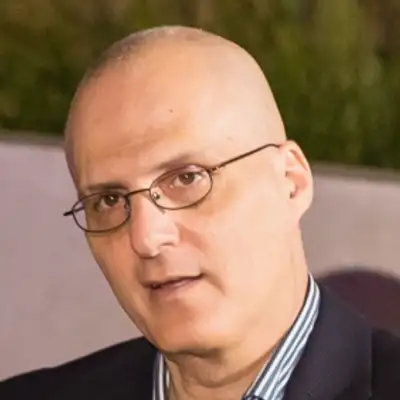
What does it take to invest in a quantum hardware company that has deliberately chosen not to pursue an intermediate product? Sebastian is joined by Barak Bussel – physicist, entrepreneur-turned-VC, co-founder of 7i Capital, and Board Chair of UCLA’s Center for Quantum Science and Engineering – operates at the intersection of frontier investing, scientific innovation, and ecosystem building. In this conversation, he explains how he underwrites the path to fault-tolerant quantum computing, what recent breakthroughs from Oratomic and Google Quantum AI suggest about the timeline to useful machines and the growing convergence of quantum and AI, and why the Bell Labs model may offer the best blueprint for building the next generation of science-driven technology ecosystems.Barak Bussel is one of the few people operating simultaneously at three levels of the quantum stack: deploying private capital into hardware and software companies through 7i Capital, chairing the strategic board of a major university quantum center, and helping stand up the physical infrastructure — a 700,000 square foot research park on the site of the former Westside Pavilion — meant to convene academia, industry, national labs, and startups in one place. He is also a physicist by training, which changes the kind of diligence questions he asks.
We recorded this at the KPMG Tech and Innovation Symposium in Deer Valley, only weeks after the most consequential stretch of quantum news in years: Oratomic's $300M Series A (the largest first institutional round in quantum history, with 7i in the syndicate), a Google Quantum AI paper cutting Shor's algorithm resource estimates to around 500,000 physical qubits on superconducting hardware, and two June 2026 White House executive orders on quantum innovation and post-quantum cryptography. If you want to understand how a serious investor is actually pricing risk, timelines, and ecosystem-building in this moment, this is the conversation.
What We Get Into
- Why 7i backed Oratomic's aggressive "no intermediate product, straight to fault tolerance" strategy, and how Barak thinks about betting on teams versus theses in deep tech
- How recent architecture and QLDPC error correction advances have compressed physical-to-logical qubit ratios, and what that means for near-term resource estimates for Shor's algorithm
- Why a lesser-noticed April 2026 Google Quantum AI paper on quantum-assisted memory reduction for classical AI workloads may matter as much as the Shor's-focused headlines
- What "patient capital" actually looks like when a connector problem eats two years of a portfolio company's roadmap
- The Bell Labs template as a serious operating model for the UCLA Research Park: convening academia, industry, government, and startups in a single physical footprint
- The historical resonance of UCLA sending the first ARPANET packet in 1969 and what that suggests about where quantum networking work should be anchored
- How Kedma's error mitigation work with IBM's Heron II and RIKEN pushed a 51-qubit Ising model simulation to the edge of what's classically tractable
- How Barak reads the June 2026 executive orders and the federal role — enabling infrastructure rather than picking winners — against the scale of Chinese government funding
Resources & Links
Guest & Organizations
- Barak Bussel bio — UCLA CQSE Strategic Board — Official page covering Barak's role as Board Chair and his physics and venture background.
- 7i Capital — Barak's deep tech venture firm, investing across quantum, AI, semiconductors, cybersecurity, robotics, clean energy, and space.
- UCLA Center for Quantum Science and Engineering (CQSE) — The multidisciplinary center Barak chairs, spanning physics and engineering research.
- Barak Bussel on LinkedIn — Where Barak has publicly flagged the Oratomic investment and the June 2026 executive orders.
The Oratomic Round and Recent Breakthroughs
- Oratomic raises $300M Series A — The Quantum Insider — Confirms 7i Capital in the syndicate for the largest-ever first institutional round in quantum computing.
- Oratomic Series A deep dive — Quantum Computing Report — Technical breakdown of the reconfigurable neutral-atom architecture and full investor syndicate.
- Oratomic's "no intermediate product" strategy — MLQ.ai — Analysis of Oratomic's bet against the QuEra/Pasqal early-revenue playbook.
- QEDMA raises $26M Series A — Quantum Zeitgeist — 7i portfolio company Kedma's error mitigation round with IBM participation, referenced in Barak's Ising model results.
Policy and Market Context
- White House EO: "Ushering in the Next Frontier of Quantum Innovation" — One of the two June 22, 2026 executive orders Barak discusses.
- Sidley Austin analysis of the June 2026 quantum EOs — Legal explainer covering both the innovation EO and the post-quantum cryptography mandate.
- Cloudflare on the accelerated post-quantum timeline — Notes that Q-Day estimates have moved in response to Google and Oratomic breakthroughs.
- PitchBook Q2 2026 Quantum Computing Funding Report — Record 2025 VC totals and Q1 2026 liquidity data relevant to Barak's exit thesis.
UCLA Research Park and Regional Ecosystem
- UCLA launches SoCal Quantum Alliance — The regional coalition Barak references, with founding members including Caltech, JPL, Boeing, IBM, and Cisco.
- Quantum Innovation Hub at the UCLA Research Park — Preview of the 40,000 square foot lab space and the broader research park vision Barak describes.
- Quantum Innovation Hub Director appointment — Prof. Jason Petta named to lead the QIH, one of the founding anchors of the research park.
Key Quotes & Insights
- On patient capital in hardware: "You're producing a new chip… all of a sudden a year and a half has passed." Barak's example of a photonics company that spent two years solving a flex connector problem is a useful ground truth for anyone modeling quantum hardware timelines.
- On the role of universities: Industry has scale — the ability to throw 500 engineers at a problem. Academia brings "the quiet depth to think very deeply about a problem over an extended period of time, two or three generations ahead."
- On resource estimates: The gap between the original 20-million-qubit Shor's estimates and the recent Google Quantum AI paper suggesting ~500,000 physical qubits on superconducting hardware, plus Oratomic's neutral-atom approach at the ten-thousand-qubit scale, represents a genuine compression of the fault-tolerance horizon.
- On the underappreciated Google paper: An April 8 paper on using quantum processors to reduce memory requirements for massive classical data sets is, in Barak's view, the first rigorous demonstration that quantum could bend the exponential curve of AI compute demand.
- On government's role: "Typically in the U.S., government is not the best at picking the winners and losers in the marketplace. But it's great at enabling." The El Segundo aerospace buildings, originally built by the federal government, are his template.
Related Episodes
- Episode 96 — Funding the Quantum Middle: Series A/B Capital with Kris Naudts and Zeynep Koruturk of Firgun Ventures — A natural companion on the venture capital view of quantum, focused on the growth-stage financing gap.
- Episode 79 — Building a Quantum Ecosystem from Scratch with Martin Laforest — Another physicist-turned-VC on how Quebec built a regional quantum ecosystem, a useful comparison to Barak's SoCal work.
- Episode 82 — The Illinois Quantum Ecosystem with Harley Johnson — On building a dedicated quantum technology park, directly parallel to the UCLA Research Park story.
- Episode 75 — Regional quantum development with Alejandra Y. Castillo — On regional coalitions and federal support for quantum tech hubs.
- Episode 76 — Democratizing Quantum Venture Investing with Chris Sklarin — A different venture perspective on how private capital is flowing into quantum.
Stay in the Ecosystem
- Subscribe on Apple Podcasts, Spotify, YouTube, or Amazon Music.
- Sign up for the newsletter and browse past episodes at newquantumera.com — where I share the papers, links, and half-formed thoughts that don't always make it into an episode.
- Follow us on LinkedIn and Bluesky.
- If this episode helped you think differently about quantum investing or ecosystem building, share it with one person who'd get value from it — and please leave a rating on your podcast app of choice. It genuinely helps other listeners find the show.