Investing in the Quantum Frontier and the Road to Fault Tolerance with Barak Bussel
Summary
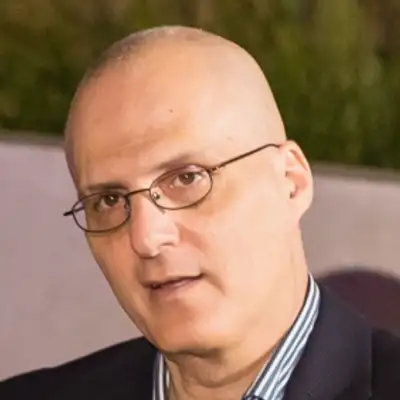
What does it take to invest in a quantum hardware company that has deliberately chosen not to pursue an intermediate product? Sebastian is joined by Barak Bussel – physicist, entrepreneur-turned-VC, co-founder of 7i Capital, and Board Chair of UCLA’s Center for Quantum Science and Engineering – operates at the intersection of frontier investing, scientific innovation, and ecosystem building. In this conversation, he explains how he underwrites the path to fault-tolerant quantum computing, what recent breakthroughs from Oratomic and Google Quantum AI suggest about the timeline to useful machines and the growing convergence of quantum and AI, and why the Bell Labs model may offer the best blueprint for building the next generation of science-driven technology ecosystems.Sebastian Hassinger • 00:02
This is the New Quantum Era. I'm your host, Sebastian Hassinger. Quantum tends to produce two very different kinds of conversation. The academic researcher asks what is true, what is possible, and which problems are worth pursuing even if the payoff is years away. The investor or institutional leader has to ask a different set of questions. Which technical claims can survive diligence? Which teams can turn them into systems? and where to commit capital, people, and infrastructure before the evidence is complete. Those perspectives need each other, but they don't often live in the same person. Barak Bussell has spent his career moving between them. Barak trains as a theoretical physicist, undergrad at Harvey Mudd, masters at UCLA, before becoming an entrepreneur and venture capitalist. He is the co-founder of 7i Capital, a deep tech fund with positions across quantum, semiconductors, AI, and clean energy. At the same time, he is the board chair of UCLA's Center for Quantum Science and Engineering, which is in the middle of building something genuinely unusual, a seven hundred thousand square foot research park on the site of the former West Side Pavilion. in West LA. Meant to convene academics, major industry players, national labs, and startups in one physical space He talks about it in explicit reference to Bell Labs and to the fact that UCLA sent this the first packet of information on what became the internet back in 1969. That's the ambition. We recorded this in person at the KPMG Tech and Innovation Symposium in Deer Valley just a few weeks after what I think has been the most consequential stretch of news in the history of this field. Oratomic, a stealth Caltech spin-out with a founding team that includes people like Dolev Bluestein and collaborators around the John Preskill and Robert Huang orbit came out of stealth with a $300 million Series A. That's the largest first institutional round for a quantum computing company ever. Seven Eyes in the Syndicate. On the same day, Google Quantum AI dropped a paper arguing that a fault-tolerant machine on the order of half a million physical qubits could be enough to run Shore's algorithm And two weeks earlier, the White House had signed a pair of executive orders on quantum innovation and post-quantum cryptography. So we get into all of it. How you underwrite a company that has explicitly said it will not ship an intermediate product, what deep tech patience actually looks like when a connector problem eats two years of your roadmap. why he thinks a lesser known Google paper on quantum assisted memory reduction may matter as much as anything else this year, and what the Bell Labs template really means when you're trying to build it in 2026. with a mix of federal dollars, industry partners, and startup capital. It's a wide-ranging conversation, and Barak is exactly the kind of guest who rewards patient listening. Here's Barak Bussel. Okay.
Thank you very much, uh Barak, for joining me. I'm really looking forward to this conversation. Um I I think the the logical I mean there's a bunch of things I want to discuss, but the logical starting point is sort of the most topically interesting uh uh aspect of of your professional involvement in 7i and its investment in Aura Tomic. Aura Tomic is Gotten a ton of attention. Um they've managed to ri raise $300 million in their first institutional round. Um basically off of a uh a shocking research paper, I think. So so um tell me a bit about your perspective on on Oratomic and and what it means for sort of the progression of the industry itself.
Barak Bussel • 04:24
You know, we uh we've been tracking the founders for a long time. Obviously, some of them are very well known. We've uh known Dolev for for a while. In fact We tried to recruit him to UCLA a couple years ago. And it would have been a major boon to have him at the physics department. Obviously Caltech can go wrong with uh being a Caltech, one of the best in the world, then physics may be hands down the best. And and um so so first and foremost for us with any company that we invest in. is the people. And and you know, doing um hardware in quantum requires a lot of skills. And if I look across kind of the global ecosystem, this is perhaps one of the best, if not the best, uh quantum hardware uh team on the planet. Bar none. And so that's that's the first product hit for us, right? We we we really appreciate the skill sets from from you know Dolov himself, from John Prescott uh Robert Huawei. That's right. Well I hear he's doing some kind of neutral atoms company these days, but not sure which one. So so so first it's that And in MNC.
Sebastian Hassinger • 05:43
It's almost more important than the than the thesis in the research paper that you uh you you s value the team in a sense, right?
Barak Bussel • 05:49
Yeah, and in in many ways, you know, I think and and this is not just true for quantum. It's it's true in general for every great startup uh a lot of times you have to pivot. Right. You have to adjust midstream, right? You have to figure things out differently. And that's both technically and from a business model standpoint. So so it's really about betting on on on the horses, on on on on the team that's going to be able to make the adjustments as they go along. And and certainly, you know, they hands down have the technical chops uh to do the things that are necessary. And so so so that's point number one. In addition to that, I think that we're now at a unique uh time in human history with uh AI and the ability to do things that five years ago would have been unheard of. And and companies like WarAtomic and others are being aided by the fact that they now have these most incredible compute tools available to them. So I think Waratomic is uniquely positioned. to be able to to kind of harness and leverage some of these things, together with obviously the capabilities of the team. And and you know, as we look ahead you know, uh uh a bit of time um and I won't be too specific. But uh as we look ahead I think they're very well positioned to get to a first fault tolerant machine. And in fact that's that's what we've all wanted. Got a all of us who've been, you know uh deep in physics and in have been part of this of this ecosystem, this is this is the goal. This is the holy grail to get to the first fault tolerant machine. And I think they're very well positioned to do that.
Sebastian Hassinger • 07:34
And that I mean that what's shocking to me is, you know, sort of the original resource estimations, um, you know, f the first ones done after Shore's algorithm. uh was formulated were something like twenty to thirty million physical qubits. Craig Gidney brought that down an order of magnitude a couple of years ago. Um Pinnacle in Australia with the the iceberg approach brought it down to hundreds of thousands. But this is now tens of thousands of physical qubits. What's the sort of I mean i is there a specific sort of ratio? I mean I think people think in terms of ratio of physical to logical qubits.
Barak Bussel • 08:09
that they're shooting for with with their their architecture So one of the things that happened also just around the same time you you referenced the paper that Oratome you know came out of stealth with and published Google published a paper on the same day.
Sebastian Hassinger • 08:26
Yeah.
Barak Bussel • 08:26
And and Google's paper talked about Google quantum AI talks about being able to use a superconducting architecture. and and you know thinking of doing something like running Schwarz algorithm with on the order of 500,000 uh physical qubits, which as you pointed out is a far cry from the 20 million plus that we started with. But it's still significant considering the fact that today with superconducting architectures were on the order of hundreds to one ten to the third, we're still pretty far away from that target. Oratomic is using obviously a completely different approach, neutral atoms approach. They've had some brilliant kind of insights and and you know, dare I say, some significant breakthroughs on on the way of thinking about these things. And and as you add to that the latest um quantum error correction codes, QLDPC codes and and other things. Then you start, you know, going Down that you know kind of scale from you know no longer are we talking about a thousand to one in terms of physical qubits or uh to logical qubit ratio or 500 to 1 but a much much lower ratio now i don't want to get into like specific numbers uh but but obviously You know, if you look at the paper, that they were talking about something on the order of ten to the four, ten thousand physical qubits, and being able to even attempt to run Shore's algorithm with a machine of that scale. Yeah. Is is a major breakthrough.
Sebastian Hassinger • 10:05
Yeah. Yeah. And is is the there's no intermediate product, right? There's sort of They're shooting for this fault tolerant device that can essentially break RSA 2048 in a matter of a week or so, or something like that is is mentioned in the paper. Is it also envisioned to be sort of a general purpose quantum computer with that scale of logical qubits so it'll be able to run other algorithms and that with for other use cases.
Barak Bussel • 10:32
Well I I'm always a little careful w when we think about kind of general purpose machines, right? Because you know we have general purpose machines more or less now, our laptops and our phones. And they do a pretty darn good job at this. And and I think uh quantum computers are are not quite there in that place.
Sebastian Hassinger • 10:53
Is it going to be a universal quantum computer in the sense that you can you can throw other algorithms at it? It's sort of arbitrary quantum circuits that can run at the same sort of or is it or is it really optimized towards shores?
Barak Bussel • 11:05
Yeah, I I I don't think I don't think they approach it or atomic and frankly you know and other companies that are kind of vying for the same for the same mountaintop. I don't think the approach is really a machine that's bes bespoke that that's designed just to attack kind of RSA 2048. The idea is to be able to do general compute. as much as kind of possible. And and one of the corollaries to that is that, you know, the encryption standards that we've had from the past are no longer going to be enough to to protect us. Right.
Sebastian Hassinger • 11:38
Right. And I guess, I mean, it's it's always seemed to me that Schorz is almost sort of a blessing and a curse for the field of quantum computing because it It's a theoretical goal that I don't really think there's a similar kind of counterpart to it in classical compute. We sort of started with heuristics and techniques to squeeze you know faster computations out of the early computers. We had this idea of being able to break codes long in advance of having the hardware. We still don't have the hardware But it's it's so it makes it tangible, like the power of the device makes it makes it tangible and it potentially you know is attracting more interest from investors. We're certainly seeing more and more investment investment in quantum. and potentially maturing the market so that there's more exits as well. Do you think that's sort of a it has that kind of fill you know, uh um emotional resonance, that it's something tangible that people can sort of relate to, um, whereas the rest of quantum computing is sort of still mysterious.
Barak Bussel • 12:39
Well, I you know I think there are a couple of things that have happened recently that remind me of, I guess, 1971, 1972, were first microprocessor from Intel. And you know, what was Intel preparing to do with that microprocessor? Power a calculator. Yeah. And and we we really didn't know, you know, standing here fifty years, fifty plus years ago, that we're gonna get to this place, right? And but but what's pretty unique is just as you kind of outline is A, there's a very interesting problem, right? The ability to run Schwarz algorithm and and actually you know be able to factor large numbers with it. It just so happens that you know we we we kind of predicated our our uh cryptography on on on on the same principle. Yeah. Um But one other thing that happened around the same time is, I think it was April 8th, there was a paper that was published by Google Quantum AI with collaborators. from Caltech, many of them are, but not all, are founders of Waratomic. And and you know I think that paper's you know maybe didn't garner as much attention as it as as it should It is the first time ever a rigorous analysis that demonstrates that at some point in time We're going to be able to use quantum processors to vastly decrease the memory requirements to process massive classical data sets. So if you look at kind of the current AI landscape, the problems are we're scaling way too fast for our ability to generate uh energy to to produce memory and so on. And and you know so so the for the first time ever there was theoretical analysis that shows that with quantum AI working in concert with quantum at some point in time, that exponential increase is going to decrease some. So we're not going to have the same kind of ravenous you know, uh increase in in energy consumption and and in memory consumption.
Sebastian Hassinger • 14:54
And that's I mean that's that's due to the ability to encode a very high dimensional space, right? Using that Hilbert space. in the in in the the quantum computer to to represent the data. So there's still the the chat the overhead of encoding into that high dimensional space and then decoding I was that's exactly right.
Barak Bussel • 15:12
And look it's also You know, question is w what what does massive data set mean? Yeah. And we're talking about exabytes, right? So for for us today, that's massive. But at the rate that we're growing consuming AI resources, two or three years from now, XBytes may be in a part of the course. A thumb drive. That's right. It's a pretty cool thumb drive, right? But I mean it's it's pretty amazing that you know we finally see kind of how close I mean two completely different approaches to life, right? One is very m is very based on on classical techniques and networks and other things. And the other one is is very deeply ingrained in quantum mechanics. But we see kind of how these things are converging. And as we move forward, it's not just being able to factor large numbers, but also being able to kind of harness the high-dimensional Hilbert space to be able to to do things that we just can't do today at all. So I'm pretty I mean I'm pretty excited about kind of the future of this
Sebastian Hassinger • 16:27
I want to uh widen the aperture because I think this is a really good opportunity to talk about. I mean, Seveneye is not just a quantum fund. It's actually been a deep tech fund for quite some time. Um, so I mean I'm curious from that perspective, like to what degree like that's sort of there's there's other examples from your experience in deep tech where that kind of convergence potentially happens and also that it it requires patience and foresight to sort of you know wait for those advances to come and actually start to see the the the benefits from. Is that is that sort of But part and parcel as a as a deep tech investor?
Barak Bussel • 17:05
I mean it it really has to be that 'cause I mean the the design cycles in Hornware. are just that much longer than they are in anything related to software. And even though the the the time frames are accelerating now, accelerating both on the software side with of all the the the AI goodness that we see. But but also, you know, on the hardware side, we're gonna be aided in designing things and and in in in modifying them and so forth with these new tools as well. But but still you know you're you're you know producing a new chip, you're designing it, then you know you're you you may be leveraging kind of an outside foundry like TSMC And then you know there's a cycle of you know kind of we call it taping out, right? You're you're sending your designs, you're getting these things prototyped, comes back, you need to test them, all of a sudden a year and a half has passed. Um and and and in hardware you also see things that are incredibly hard that People who don't do this every day a priori don't expect it to be hard. For example, you know, we w one of our portfolio companies was was doing some really breakthrough work in photonics in the past. And and to your point, it takes a lot of patience. It's it's it's it's you're you you have to be You know, it's the proverbial definition of patient capital, right? You really have to be in it for the long game. And and You know, they taped a new kind of semiconductor. They prototyped it a lot in-house. It was a combination of silicon and non-silicon-based semiconductors. The device was was being tested and was working great. But in order to put it as part of a system, you need to be able to connect it to a flux connector. And that became a challenge that lasted, you know, just given kind of the density of, you know, through silicon vias and other things. It it it became a challenge. It took two years to figure out how to plug it in. It's like it's a no-brainer. Yeah, this is not a big deal, right? That's right. So so I mean look we we see the same thing in quantum, right? Where where the cabling, the cable infrastructure is is very challenging.
Sebastian Hassinger • 19:30
There's certainly there's that category of this like really hard engineering problem, but I think also I think for what c um characterizes deep tech including quantum is that you've got a mix of engineering and science challenges. And the science challenges are very hard to forecast exactly what you know what amount of effort it's gonna take to get to a solution that you can then engineer uh into into actual technology. Is that is that also something you have to manage as a as a deep tech investor?
Barak Bussel • 19:59
Yeah, Sebastian, it's as as you were kind of asking that, I was I was reminded of uh a an example where we're working in the portfolio company that was doing some um some work in advanced energy and and that work depended on two parts. The first part was Does the physics work?
Sebastian Hassinger • 20:22
Right.
Barak Bussel • 20:23
And when you're doing stuff and you know sometimes we call material science like black magic. Just because it's so I mean we don't yet have the ability to to kind of simulate the quantum mechanics. I I mean in that kind of in that kind of granularity And maybe we will, right? Have these great tools. Great quantum computers coming, right, from Oratomic and from other companies.
Sebastian Hassinger • 20:46
That was his original sort of insight as trying to simulate nature
Barak Bussel • 20:52
That's right. So so you know, the ability to do that um for for many decades as we've grown in material science You know the adage has been you gotta build it and see. Right. Right? Because you know wit without there's no alternative. Right. So so you need to be able to bring the physics Almost to the point so so there's no clear violation of every of of any like first principles. But once you're there, then you really need to build it. And and and so you're absolutely right in the sense that You know, the early work in some of these companies is kind of basic science in certain respects. It's basic applied science. And it's like Is this even going to work? Does the second law of thermodynamics somehow prohibit this this migration? But once you do this, Once you convince yourself that it's possible, then starts kind of the engineering work. And that engineering work is not trivial, you know As a theoretical physicist, sometimes, you know, we we we think, ah, you know, building building the dam or building the bridge is no big deal. I already figured out the principles, right? But but but in fact You know, that's where most of the doing happens, right? And in some of it is less linear at the front end And some of it becomes once you understand things better, the transition becomes, you know, where where people have done it before, then it becomes more linear and more well understood.
Sebastian Hassinger • 22:20
The other thing I noticed is you know, sub challenges. You can sort of get to the point where you can turn the science into engineering, but then things Things like transduction uh for example, which looks like it's going to be key to scaling and superconducting devices, there isn't really a good foundational way to transduce microwave frequencies to to telecom frequencies. There's a bunch of sort of ways you can do it that are hacky and and end up with like 65% fidelity or whatever. And that's that's like a scientific you know, fundamental scientific breakthrough that needs to happen in order to at least the way we're approaching transaction right now, that's you know just a subcomponent of overall systems engineering and and building the the thing. It feels like there's all kinds of potential hidden challenges like your connector example that are also very fraught in deep tech.
Barak Bussel • 23:14
As we think about this It's like let's put a data center up in space. Great. Because it's cold in outer space. But how does the heat actually how do we conduit the heat out of these things? Right? So so to your point, there's There's a lot of interesting things that a lot of interesting problems that we have to solve. And in it's not just figuring out the best qubits. And it's not just about You know, what's the best error reduction schemes? Um, if we can think about this together for a second, I mean I I I was got a privilege to present some results from one of our portfolio company is a uh quantum software company called Qedma.
Sebastian Hassinger • 24:01
Um and in Dohrit on the podcast a couple years ago. Oh you did?
Barak Bussel • 24:05
Yeah yeah oh she's fantastic I mean so so so you know if you think about kind of error reduction broadly, it's some kind of hybrid of error suppression, error mitigation, and error correction. And obviously we're not yet in the place where we can do a lot with error correction in terms of uh you know putting together logical qubits from physical ones, but you know, we're getting closer and closer until we get to that point. I you know I presented uh uh a a set of results where you know the company was working in partnership with IBM and you know with the uh Japanese superconducting um sorry uh supercomputing uh um leader recant exactly And it was it was a basic physics problem. It's an icing model. And and they took an IBM uh Heron II chip with 156 physical qubits, we selected fifty-one uh of those qubits and essentially turned them into 51 logical qubits. And they did that by, I mean obviously there's no free lunge, so you have to leverage some classical compute. And the results were Comparing 10,000 CPU, classical CPU hours, to a few hours, a handful of hours of QPU time with IBM chip. And um several hundred hours of uh classical CPU time working together.
Sebastian Hassinger • 25:42
Right, with the Ketma error error mitigation.
Barak Bussel • 25:44
And and and the incredible thing, Sebastian, is looking at those results, again as a physicist. just you know from the the purity of those results were like we were really at the edge of the ability to simulate things classic. Right And in some of that simulation included simulation of behavior that up until today we meaning kind of physicists have only been been able to say qualitative things about based on kind of what the physics says, but we were never able to actually simulate them quantitatively. And obviously this is now months old. Yeah and there are going to be some new results that are published that are going to blow those away. So so I think we're really at this at this place where we're pushing the envelope on on what's what's been possible uh up until now.
Sebastian Hassinger • 26:35
Yeah. Yeah, and that sort of brings to mind, you know, the role of um uh the academic world, um, you know, the the scientific skills are required to sort of drive these challenges forward in in deep tech generally and quantum specifically Scientific skills tend to be concentrated in the academic community and in the public sector in national labs in places like RECAN. Um i is that sort of I mean you you're you're a a physicist by training, you're you're um you play a role at UCLA at the Center for Quantum Science and Engineering. Um is that sort of your main motivation in in bringing in and enlisting the the scientific community and academia and and the public sector to help with those fundamental challenges in in the in the technology arena?
Barak Bussel • 27:26
When we look at industry today, industry certainly has the scale. the the numbers of engineers and the ability to to you know throw five hundred kind of experts at a problem. But often industry doesn't have the the kind of quiet depth to think very deeply about a a problem over an extended period of time two or three generations ahead of of what industry does today That's really the role of academia. Yeah. Where we bring in that depth, whereas industry brings the scale. And in order for us to advance the state of the art in quantum, and frankly, The state of the art infusion. And in the state of the art in pretty much every other area of D-Tech We need to marry these two things together in a way that makes sense for the twenty first century. And for me that's you know we we we chatted a little bit before about uh Bell Lambs and and that's really the Kind of the the the model that provided inspiration for the Center for Quantum Science and Engineering. It's how do we convene academics major industry participants, government agencies, and startups to kind of all cohabitate and cross-pollinate in a single physical space. They all do kind of proprietary research and other things behind closed doors, but then they get to, you know, uh spend time together in the common areas and eat and drink and be merry together to really further uh what what is possible both kind of on the science side but also on the innovation side. So that that is really what the Center for Quantum Science and Engineering is. It started as a kind of multidisciplinary collab on campus between the School of Engineering, which, you know, the the the UCLA School of Engineering is one of the most storied uh progenitor of of semiconductor companies anywhere, probably hands down the best in in the United States. You know, where companies like you know Broadcom and Innovent and Newport Communications and most recently Sylvis and and others came out of that. uh ecosystem. So to collab between the School of Engineering and the Division of Physical Science, where we have somewhere between 150 and 200 uh researchers, postdocs, graduate students, all working together in their respective fields to uh progress uh uh what is possible in quantum information science. So that's kind of how things started. And from the time that I joined as chairman about six years ago, um one of the things that's been very unique is that um we were looking for a uh physical space a physical instantiation of what's a kind of a collab on campus among different researchers. And we're literally scouring the West side of LA for you know three years and it's not it's not the easiest place to to find you know great real estate. And it just so happens that um There's a former uh shopping center. Right. It used to be called the West Side Pavilion. It was a staple of LA life for decades. And in Google had leased that space uh before the pandemic. And they were planning to turn it into a Google Southern California campus and have probably a couple of thousand scientists and engineers located there. And and obviously the pandemic happened, so uh plans changed and and a couple years ago UCLA became the beneficiary of that and through a transaction with Google and the property owner. And now UCLA owns uh uh pretty much the whole former uh Westside pavilion space with one exception, it's a massive space. 700 squared square feet of space. And and as you look across If we do our job well over the next three to five years, this is going to be one of the best research parks on the planet. So we're transforming it into a world-class research park that has two cornerstones One of them is uh called the California Institute for Immunology and Immunotherapy, so it's all about life sciences. And the other is RB, which is kind of quantum at the research park uh basically advancing uh everything across the board on quantum information science, not just in computing but in quantum sensing, in quantum communications and networking, and and and then things kind of that that are in between. semiconductors and microelectronics and material science, etc. And you know our our friends at the C Triple I at the California Institute for Immunology and Immunotherapy, they have the the modest goal of curing all chronic diseases And as a scientist, if we were having this conversation 15 years ago, I would probably have told you it's a great lofty goal. Probably not something that we'll see in our lifetime. Today, I think about this differently and I think these things are actually achievable. I I I'll add one more thing. Um we talked about going to the moon earlier, and um so it was October 29th, 1969, I believe, where the first packet of information was sent from UCLA to SRI up at Stanford, and that was the first packet that was sent on what became later the internet. Right. That was ARPANED. ARPA was the predecessor of DARPA. And then those were the first two nodes that became later poor and expanded from there And and you know, UCLA we're doing some, together with major industry participants, we're doing some phenomenal work on quantum communications and quantum networking. And and it's a bit prophetic, right? That you know we've gone you know fifty-five, you know, close to sixty years now, and we're coming back full circle to be able to do that at the research park as well. So we're we're we're very excited about the future But what's possible to do in this kind of in this kind of setting.
Sebastian Hassinger • 33:38
Right. I mean the last thing I want to touch on is you you've posted on LinkedIn about uh the the sort of increased awareness and focus on quantum technologies from the at the federal level with the couple of executive orders and the the DOE uh quantum genesis mission and and other things. Do you see that as, you know, at the level of urgency and focus that it needs to be, is that sort of a good step but there needs to be more attention, more funding, more you know, coordination, more convening? Uh or wha what's your sort of feeling there?
Barak Bussel • 34:12
I I think that uh the federal government has done a fantastic job as of late um you know in the last couple of years really paying very close attention to what's important and what's important and what's going to drive the needs of national and economic security of the United States going forward. And not just of the United States, but broadly of the US and all of its allies. So now could there be more Absolutely. But we have a very unique kind of approach in the United States, which is different from what it is, you know. with our distinguished competitors outside. So you know if you look at kind of China, I think last year we looked at a new government fund in China that um you know was allocated to various areas of deep tech with some quantum theme. was $138 billion. Just one government fund. So obviously the Chinese government is putting a lot of resources, a lot of muscle behind these things because they believe they're strategically important, as we do here in the US. So There is a very important role for government to play and and the new two billion dollar uh vehicle And and then the the renewed focus on these areas is very important. And I think back to you know if you look closer to LAX uh to uh LA International Airport, uh The area surrounding it is called the El Segundo and it's full of aerospace companies. Traditionally it was the bastion of aerospace uh for for for the US where Hughes used to be. Right. Now Boeing and Raytheon and a number of other major companies. And there's a tremendous renaissance in space companies there. It's incredible. It was really breathtaking to see, you know, companies that um you know I mean I I was having this conversation with a friend that that um has a very substantial uh satellite company and and and I said to him Wow, ten or fifteen years ago this company would never have gotten funding. They just recently raised another half a billion dollars. So so it's amazing, you know, what's what's what's going on in that ecosystem. But If you look at some of the buildings, some of the older Skunkworks buildings and others, those weren't built by the companies that occupy them. Those were built by the United States government. Decades ago. And then part of the kind of private public partnership was let us help with infrastructure. And we'll let you loose. You're gonna occupy these buildings and you're gonna create kind of the next generation of of great science and technology. And and I think that model works well. Uh for the US. So do we need more? Absolutely. But it's important that the more comes in a very targeted approach. Where, you know, I think typically in the US, government is not the best at picking the winners and losers in the marketplace. But it's great at enabling. Dharpa is a great example of that. And and so so you know prepare the ground. and and help pay attention to all these things and add the resources as necessary. So so so I think the the the role of the federal government is frankly The the role of, you know, for us in California, the role of the state of California. The governor's office is very you know, pays very close attention to this. They've put significant resources uh to work and they will continue doing that. So so I think it's really kind of across the board the role of government to help catalyze and and enable this. uh because otherwise it's gonna be very hard for any comp forever any country to compete.
Sebastian Hassinger • 38:09
Yeah.
Barak Bussel • 38:10
And and you know, we're in We're in a pretty important um um competitive landscape right now.
Sebastian Hassinger • 38:16
You said before we started recording it was sort of an all hands on deck kind of moment and I I Couldn't agree more. So uh this has been really, really great, Barak. I I appreciate your time and uh the depth of experience that you bring to it. So uh thank you.
Barak Bussel • 38:29
Thank you, Sebastian. Thank you.
Sebastian Hassinger • 38:33
Thanks again to Barak Basel. for a genuinely wide-ranging conversation. The line I keep coming back to is his framing of the university's role. Industry has the scale, but academia has what he called the quiet depth to think about a problem two or three generations ahead. That's a useful way to think about why places like CQSE exist and why the Bell Labs analogy is more than a marketing line. It's actually a claim about how deep tech gets built. I want to thank Richard Entrop and the rest of the KPMG team again for hosting me. This week at the symposium. It's been a trend tremendous experience and had a really good time with conversations with Barak and many, many others. Full show notes for this episode are at newquantomero. com, including links to the Oratomic Series A coverage. the Kedma and IBM Heron 2 results Barak referenced and the two June 2026 executive orders and background on the UCLA Research Park and the SoCal Quantum Alliance. If you're new to the show and want more on the venture side of Quantum, I'd point you to episode ninety-six with Fergun Ventures and episode seventy-nine with Martin LaForest, both good companions to this conversation. While you're on the site, sign up for the newsletter. That's where I share the links, papers, and half-formed thoughts that don't always make it into an episode. If you're getting value from the New Quantum Era, the single most useful thing you can do is share an episode with one person who'd appreciate it and leave a rating wherever you listen. It genuinely helps other curious listeners find the show. Thanks for listening. I'm Sebastian Hassinger, and this has been the New Quantum Era, theme music by OCH. See you next time.